
AI Is Learning Our Biases. Women Are Paying the Price.
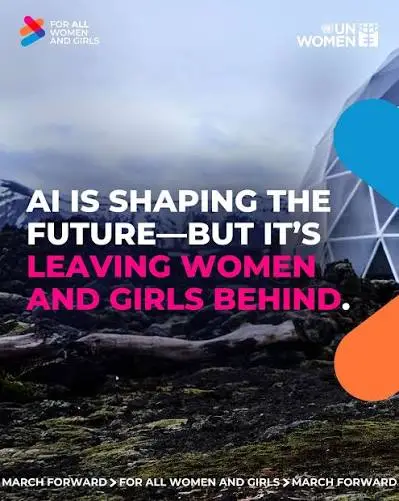
Artificial intelligence does not arrive with opinions of its own. It learns patterns from data created by people: books, websites, photographs, medical records, résumés, news stories and countless other traces of human life.
That is what makes AI useful. It is also what makes it vulnerable to our prejudices.
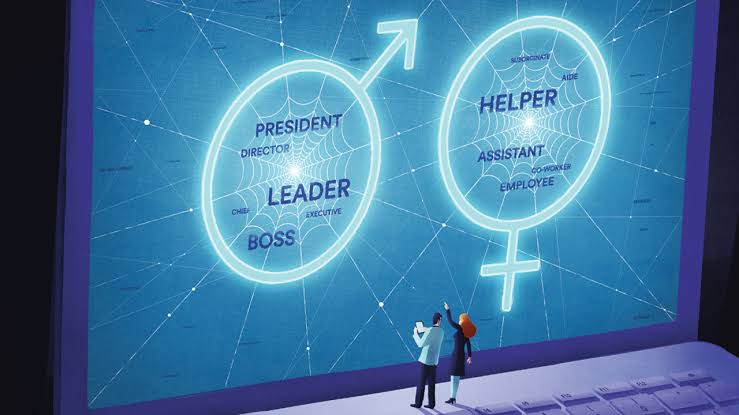
Large language models work by predicting which word or fragment of a word is likely to come next. If the material used to train them repeatedly associates leadership with men and nursing or caregiving with women, the system can learn those associations as if they were ordinary facts. If women are missing from medical research, executive leadership and historical records, AI does not automatically repair the omissions. It may repeat them with remarkable speed and confidence
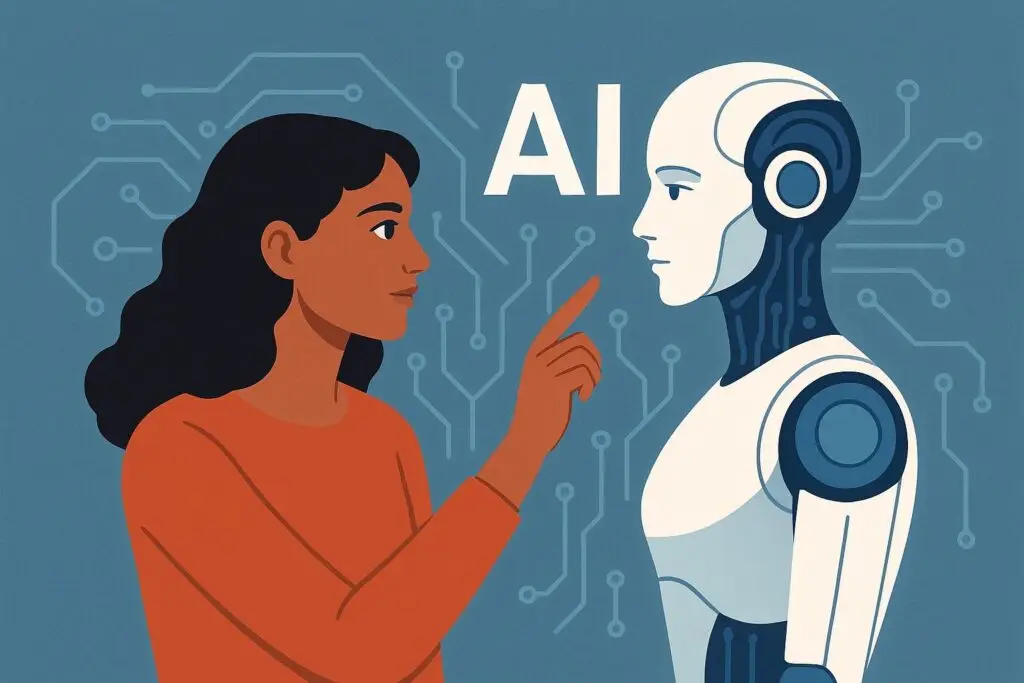
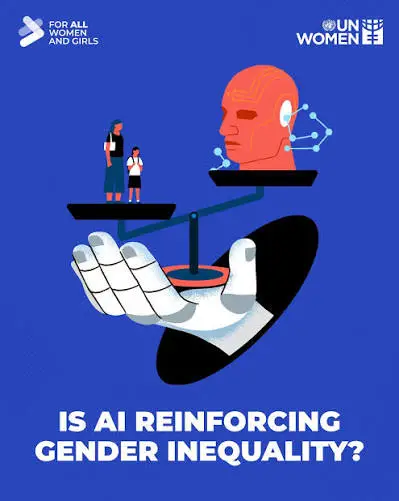
AI is not inventing inequality from nothing. It is learning from the inequality already around us—and sometimes giving it the appearance of objective judgment. Bias in technology is often discussed as though it were a minor technical defect: an unfortunate glitch that engineers will eventually patch. But a biased system used by one person is a problem. A biased system used to screen thousands of job applicants, summarize health records or identify faces can turn an old prejudice into a decision-making system. The danger is not simply that AI may say something stereotypical. The greater danger is that institutions may trust the output because a machine produced it.
Consider hiring. Amazon abandoned an experimental résumé-screening system after it learned to penalize indicators associated with women. The tool had been trained on résumés submitted during a period when the technology workforce was overwhelmingly male. It did not need to be explicitly programmed to prefer men; it learned that preference from the history it was given.
That example is several years old, but the lesson has not expired. Hiring systems can now help decide which job advertisements people see, which résumés receive attention and which applicants advance. When the criteria are hidden, a rejected applicant may never know whether she was screened out because of her qualifications or because the system treated a career break, age-related clue, women’s organization or nontraditional work history as a liability.
For lesbian+ and queer women, that opacity matters. A résumé may contain leadership in an LGBTQ+ organization, work at a queer nonprofit or other details that indirectly disclose sexual orientation. The evidence does not establish that every automated hiring tool penalizes those details. It does establish why employers should test their actual outcomes instead of assuming that software is doing that.
The stakes become even higher in health and social care, where women have long reported having pain and symptoms minimized. In a London School of Economics study, researchers generated 29,616 pairs of AI summaries using real case notes from 617 adult social-care users. Each pair described the same needs; only the person’s gender was changed. One model, Google’s Gemma, was more likely to use serious terms such as “disabled,” “unable” and “complex” when describing men. Similar needs among women were more likely to be omitted or described less seriously.
Importantly, another model in the study did not show the same gendered language. That distinction matters. Bias is not an unavoidable law of AI. Design choices, training data, testing and oversight can change the outcome.
AI could improve care by helping clinicians identify patterns, reduce administrative burdens and recognize conditions that human systems have missed. But a system trained on incomplete medical knowledge can also make an old problem harder to see. If women’s cardiovascular symptoms, pain, hormonal conditions or experiences of discrimination are poorly represented in the source data, the model has less reliable material from which to learn.
Queer women can face another layer of invisibility. Sexual orientation is not consistently or safely recorded in health data. Trans and nonbinary people may be forced into categories that do not describe them. A system may make heterosexual assumptions about partners, sexual health, pregnancy or family structure. The absence of inclusive data can protect privacy in some settings, but it also makes unequal outcomes harder to detect. Good data practices must therefore balance representation with consent, confidentiality and the very real risks of involuntary disclosure.
One of the clearest demonstrations of intersectional AI bias came from researchers Joy Buolamwini and Timnit Gebru. In their evaluation of commercial facial-analysis systems, the error rate for classifying the gender of light-skinned men was no worse than 0.8 percent. For dark-skinned women, error rates rose above 20 percent in one system and above 34 percent in two others.
This was a test of commercial gender-classification systems—not proof that every contemporary facial-recognition tool has the same error rate. But it exposed something essential: a product can appear highly accurate overall while failing badly for a smaller group hidden inside the average.
The category system itself was also binary—male or female. That design leaves little room for people whose appearance does not fit conventional gender expectations. Masculine-presenting lesbians, gender-nonconforming women, trans people and nonbinary people can experience not only misclassification but the deeper indignity of being treated as an error by a system that was never designed with them in mind.
Bias can also appear in seemingly harmless products. A UNESCO report examined the widespread use of female voices for digital assistants and the submissive or flirtatious responses some systems gave when users directed sexual insults at them. The report’s title, I’d Blush If I Could, came from one such response. The problem was not that a machine’s feelings had been hurt. It was the cultural lesson embedded in the interaction: the feminized helper remained cheerful, compliant and available, even when abused. Technology was rehearsing an old expectation about women’s work and women’s tolerance of mistreatment.
Research on AI and gender has often treated gender as a simple comparison between men and women. That can erase sexuality, race, disability, age, gender expression and class—the places where bias often compounds.
The community-sourced WinoQueer benchmark was created to test harmful anti-LGBTQ+ stereotypes in language models. Researchers found considerable anti-queer bias across the models they studied. They also found that fine-tuning models on writing by or about LGBTQ+ people could reduce some of that bias; material written by community members was more effective than news coverage written by outsiders.
That finding carries a larger lesson for lesbian+ media. Representation is not only about appearing in the data. It matters who tells the story, which language is treated as authoritative and whether communities have a role in defining the harm. A model may technically “include” queer people while still associating us with stereotypes, treating heterosexuality as the unspoken norm or filtering queer language as inherently unsafe.
There is not yet one trustworthy number that measures how much AI discriminates against lesbian and queer women across healthcare, employment, finance and media. The research is more fragmented than that. The lack of a single number should not be used to dismiss the issue. It should prompt better, more intersectional research.
The answer is not to reject AI altogether. These tools can expand access to information, help small organizations do work once reserved for large companies and uncover patterns humans have overlooked. For a growing community platform such as LesbianEarth, AI can assist with research, accessibility, organization and reaching readers—provided human judgment remains responsible for the result.
The real divide is not between using AI and refusing it. It is between accountable and unaccountable use.
Before an AI system influences health, employment, credit, education or public services, the people deploying it should be able to answer basic questions:
- What information trained the system, and who is missing from it?
- Has performance been tested separately across gender, race, age, disability and other relevant groups—not only as a single average?
- Were lesbian, queer, trans and nonbinary people involved in defining the risks?
- Can a person learn that AI affected a decision and ask for meaningful human review?
- Who is responsible when the system causes harm?
Those questions are not anti-technology. They are what responsible technology requires.
AI may be able to process more information than any individual person, but it does not decide whose life matters. People do that—through the data we collect, the histories we preserve, the systems we purchase and the communities we invite into the room.
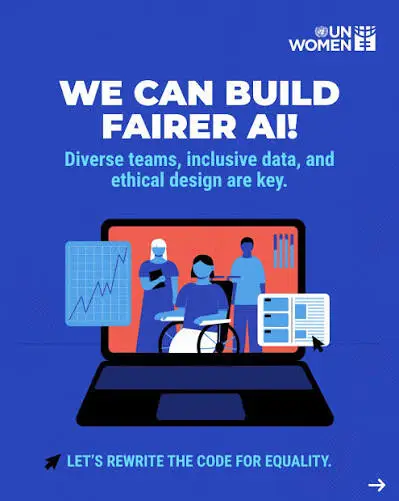
If women and queer people are missing from those decisions, AI will learn from our absence. If we are present—with authority, not merely as an afterthought—it can learn something better
About LesbianEarth
LesbianEarth LLC is a privately held media and community company connecting lesbian+ and queer women through trusted journalism, local events, travel, and digital experiences.
Founded in Albuquerque, New Mexico. Building community worldwide.
© 2026 LesbianEarth. All rights reserved.
Want to support queer women doing the work?
 Subscribe to Your Lesbian World
 Visit LesbianEarth.com
 Support Lesbian+ and Queer Women businesses
 Support Lesbian and Queer Women Events Say yes to something rooted, real, and built by us
We don’t need permission to exist.
We just need each other.
With love and fire,
Your Lesbian World / LesbianEarth