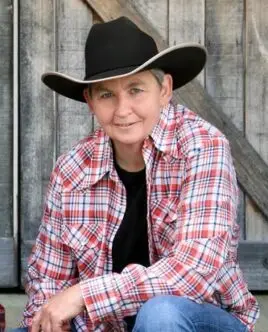
Remembering Jools Topp and Her Joyful Legacy
For generations of lesbian+ and queer women around the world, The Topp Twins were never simply entertainers. They were something far more profound: proof that it was possible to live openly, joyfully, politically, creatively, and unapologetically as queer women in a world that often demanded silence. This month, the LGBTQ+ community is mourning the loss of Jools Topp, who died after a battle with cancer. Her passing has sparked an outpouring of grief, remembrance, and celebration from queer communities across the world, many reflecting on the extraordinary cultural legacy she and her twin sister, Lynda Topp, created together over decades of music, comedy, activism, and fearless visibility.
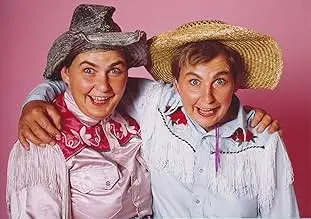
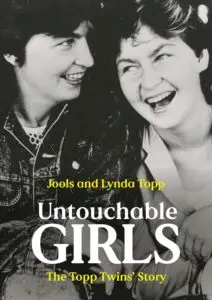
And people loved them for it. Their groundbreaking documentary, The Topp Twins: Untouchable Girls, introduced international audiences to the remarkable story behind their rise and remains one of the most moving portraits of queer cultural life ever filmed. Beneath the humor and performance was a profound story about authenticity, activism, family, resilience, and love. The film captured not only the sisters’ immense talent, but the emotional connection they forged with ordinary people across generations. Because what made The Topp Twins extraordinary was not celebrity in the modern sense. It was accessibility. They felt like people you knew. People you trusted. People who never stopped believing that laughter, music, and human connection mattered.
Their activism was equally important. Long before it was safe or fashionable, they stood visibly for LGBTQ+ rights, social justice, anti-nuclear movements, environmental causes, and working people. They understood that culture and politics are never truly separate. Joy itself could become resistance. Visibility itself could become healing.
They’re also shaped by something deeper: a constant awareness of instability. Economic pressure, identity politics, climate anxiety—this isn’t theoretical for them. It’s baseline. That changes how and where they invest their energy. So instead of asking, “Why aren’t younger queer women showing up?” the more honest question is: Are we building spaces that actually speak to the future they’re already living in?
Because when movements do align with that—when they center bodily autonomy, queer safety, racial justice, or community care—Gen Z shows up fast, loudly, and in ways that can completely reshape outcomes. We’ve already seen that kind of energy influence political shifts, including youth-driven momentum in New York elections. This isn’t a drop-off. It’s a divergence. And honestly, it’s an invitation.
For spaces like LesbianEarth, this is where things get exciting. You’re not trying to pull people back into something old. You’re already positioned to build something that feels current, alive, and actually reflective of how queer women—especially younger ones—are moving right now. Because the truth is simple, even if it’s uncomfortable: Younger queer women aren’t resisting activism. They’re resisting formats that don’t match their reality. And the second the invitation shifts—from “help us protect what was” to “come build what’s next”—everything changes. That’s not a loss of energy. That’s where the energy actually is.
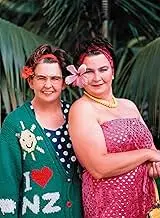
And perhaps that is why the loss of Jools Topp feels especially emotional right now. We are living through anxious times. Across the world, LGBTQ+ communities are once again watching political hostility rise, rights challenged, books banned, and public discourse grow harsher and more fractured. Many queer people — especially younger generations — are carrying exhaustion, fear, loneliness, and uncertainty about the future. In moments like these, figures such as The Topp Twins remind us of something essential: queer culture is not built only through protest or survival. It is also built through joy, humor, storytelling, music, friendship, irreverence, and the courage to remain visible.
The Topp Twins helped create emotional space for lesbian+ and queer people to breathe more freely.
They reminded people that authenticity could be playful. That activism could include laughter. That being fully oneself was not selfish, but liberating — not only for the individual, but for everyone watching.
For many women around the world, seeing The Topp Twins perform openly as lesbians changed something quietly but permanently inside them. It widened the imagination of what queer life could look like. Not hidden. Not ashamed. Not merely tolerated. But vibrant, funny, political, creative, flawed, beloved, and alive.
That kind of cultural impact cannot be measured simply in television appearances, awards, or ticket sales. It lives instead in the memories people carry: a joke that made someone feel safe, a concert where someone saw themselves reflected for the first time, a documentary watched during a lonely chapter of life, a reminder that queer women have always existed not only as survivors, but as creators of beauty, humor, and community.
And perhaps that is the real legacy of The Topp Twins. Not simply that they entertained people. But that they helped generations of lesbian+ and queer women feel a little less alone.
Your Lesbian World Newsletter™, published by LesbianEarth.com, is a growing national community and digital publication for lesbian+ and queer women featuring news, culture, relationships, travel, wellness, events, retreats, music, friendship, and real-life queer connection.
Because We Were Never Meant to Do Life Alone.™
© 2026 LesbianEarth. All rights reserved.
Want to support queer women doing the work?
📰 Subscribe to Your Lesbian World
🌐 Visit LesbianEarth.com
❤️ Support Lesbian+ and Queer Women businesses
🎉 Support Lesbian and Queer Women Events
❤️ Say yes to something rooted, real, and built by us
We don’t need permission to exist.
We just need each other.
With love and fire,
Your Lesbian World / LesbianEarth