Why Younger Queer Women Aren’t Showing Up at the "No Kings" Marches
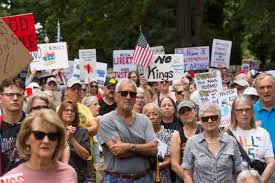
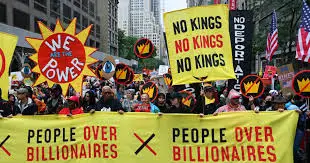
There’s a moment happening at protests that people aren’t fully naming yet. You feel it before you understand it. The crowds are big. The messaging is loud. In places like New York City, protests this year have pulled in massive numbers—organizers estimated more than 350,000 people across events tied to the recent “No Kings” demonstrations. So it’s not that people aren’t showing up. It’s that not everyone is showing up in the same way. And if you look closely—really closely—you start to notice something subtle but real: younger queer women are there less consistently in traditional protest spaces than people expect. That doesn’t mean disengagement. It means misalignment.
Because while older movements are still speaking the language of restoration—protect this, defend that, return to what we had—Gen Z came of age in a completely different reality. For many of them, especially queer women, the system they’re being asked to “restore” never actually worked in the first place. There’s no emotional anchor to “normal.” No nostalgia to pull from. So when a protest frames itself around saving democracy as it once was, it can feel abstract at best—and exclusionary at worst.
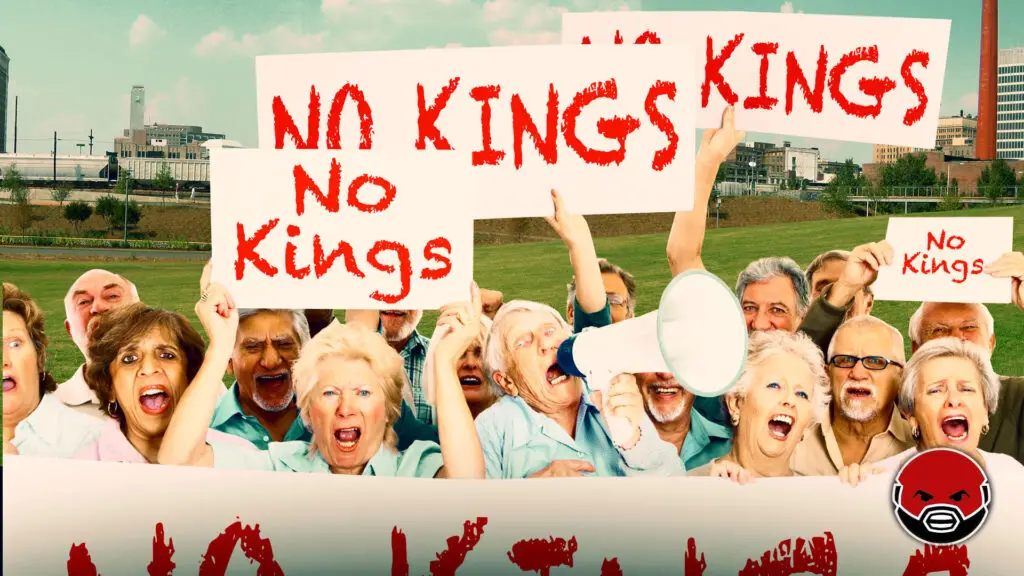
At the same time, this same generation is not sitting things out. In fact, globally, Gen Z has been driving some of the most intense protest movements we’ve seen in years—often centered on inequality, identity, and systemic breakdown. Even in New York, you can see the split. On one hand, you have large-scale protests with massive turnout. On the other, you have younger activists building parallel spaces—mutual aid networks, queer-centered marches like the Queer Liberation March, and decentralized organizing that doesn’t always look like a traditional rally.
And that’s the key shift. It’s not about absence. It’s about direction. Gen Z—especially queer Gen Z—is less interested in symbolic presence and more interested in tangible change. They’re organizing in ways that feel immediate, relational, and rooted in lived experience, not just messaging.
They’re also shaped by something deeper: a constant awareness of instability. Economic pressure, identity politics, climate anxiety—this isn’t theoretical for them. It’s baseline. That changes how and where they invest their energy. So instead of asking, “Why aren’t younger queer women showing up?” the more honest question is: Are we building spaces that actually speak to the future they’re already living in?
Because when movements do align with that—when they center bodily autonomy, queer safety, racial justice, or community care—Gen Z shows up fast, loudly, and in ways that can completely reshape outcomes. We’ve already seen that kind of energy influence political shifts, including youth-driven momentum in New York elections. This isn’t a drop-off. It’s a divergence. And honestly, it’s an invitation.
For spaces like LesbianEarth, this is where things get exciting. You’re not trying to pull people back into something old. You’re already positioned to build something that feels current, alive, and actually reflective of how queer women—especially younger ones—are moving right now. Because the truth is simple, even if it’s uncomfortable: Younger queer women aren’t resisting activism. They’re resisting formats that don’t match their reality. And the second the invitation shifts—from “help us protect what was” to “come build what’s next”—everything changes. That’s not a loss of energy. That’s where the energy actually is.
Want to support queer women doing the work?
📰 Subscribe to Your Lesbian World
🌐 Visit LesbianEarth.com
❤️ Support Lesbian+ and Queer Women businesses
🎉 Support Lesbian and Queer Women Events
❤️ Say yes to something rooted, real, and built by us
We don’t need permission to exist.
We just need each other.
With love and fire,
Your Lesbian World / LesbianEarth