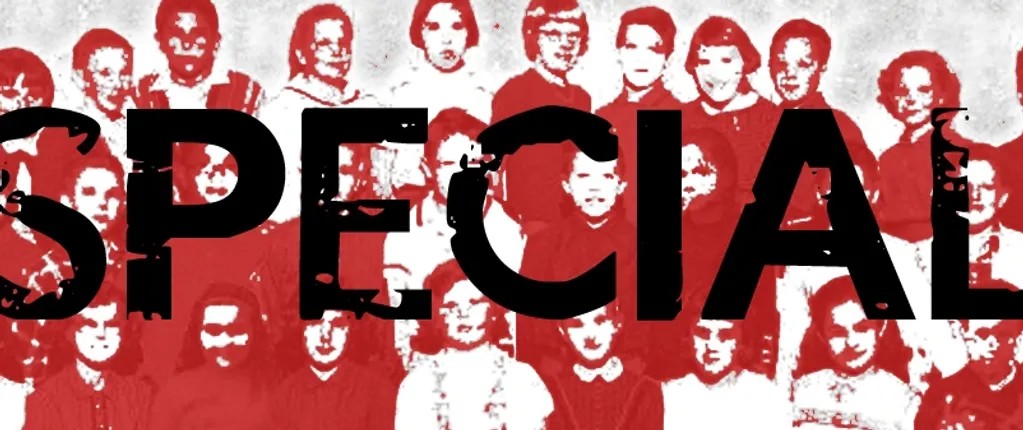
Special: A Film, a Calling, and the Refusal to Disappear
In the long arc of her career, Ann P. Meredith has returned, again and again, to a single, insistent idea: that the people most easily dismissed are the ones whose stories matter most. Her work—across film, theater, photography, and performance—has spent more than fifty years tracing the fault lines of silence, illuminating lives shaped by trauma, endurance, and, ultimately, the fragile work of healing.
Meredith’s sense of purpose does not arrive as abstraction. It is rooted in a life marked early by violence and disruption, experiences she has spoken about not for their shock, but for their consequence. She came to believe, as a child, that she was not meant to survive. What followed was not simply survival, but a kind of reckoning: since she had lived, there had to be a reason. Over time, that reason clarified into a vocation. She would tell the stories no one else wanted to hear and she continues to help others tell THEIR stories.
Her body of work reflects that commitment. In “TRIANGLES,” she examined LGBTQ lives shaped by the Holocaust, a project she now sees not only as historical record but as warning—a reminder of what becomes possible when cruelty is normalized. In “STRAP ’EM DOWN,” she documented the drag king scene in San Francisco decades before questions of gender expression entered mainstream discourse. Other projects have centered women living with HIV/AIDS, survivors of abuse, and communities marked by poverty or war. The work now resides in numerous institutions such as the Library of Congress and the Smithsonian Institution, and her Permanent Core Collection is in the Schlesinger Library on the History of Women at Harvard chosen specifically to increase International LGBTQ+ awareness through their Global accessible database.
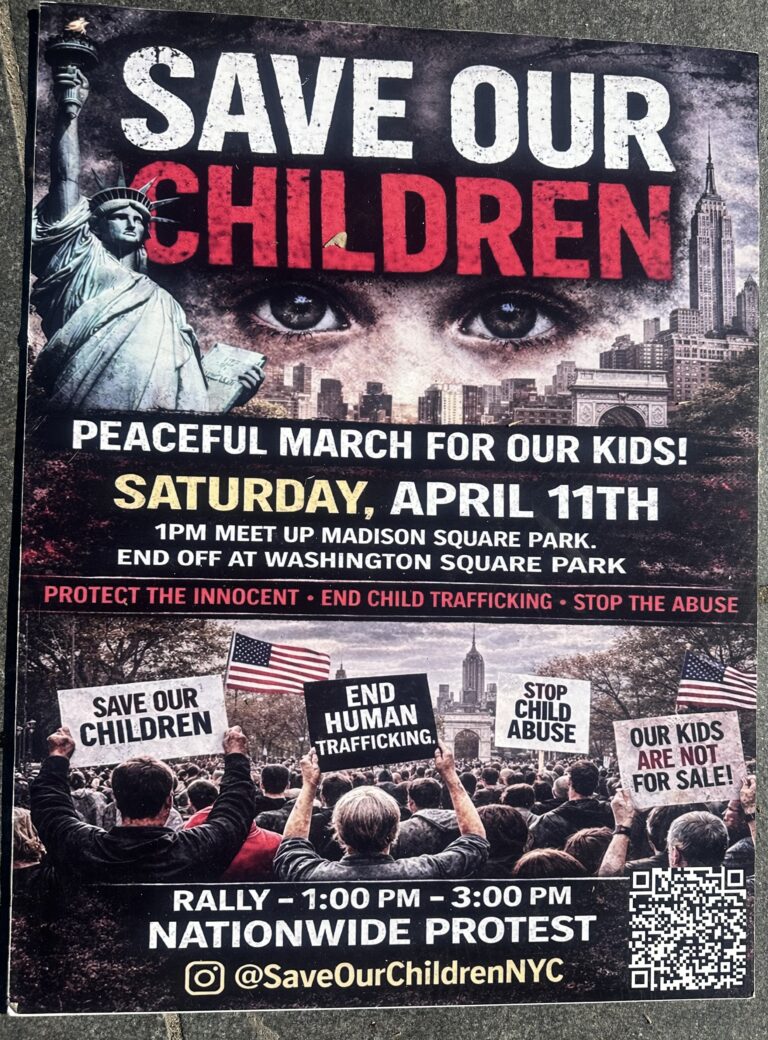
At seventy-eight, Meredith speaks of the present moment with a kind of hard clarity. She believes the culture has grown more permissive of cruelty, that discrimination is not only resurging but being modeled from the top down. The effect, she suggests, is cumulative: when those in power normalize harm, it spreads outward, quietly but decisively. She has marched, organized, and spoken publicly, but questions whether if protest though important now is enough to counter what she sees as a deeper erosion of empathy.
And yet, even in this assessment, there is no sense of retreat. Meredith continues to work, most notably on a film she has been developing for nearly three decades. The project, titled SPECIAL, began, as she tells it, she was shaken awake in the middle of the night. She was living on Fire Island in Cherry Grove when she woke with the unmistakable feeling that she needed to write. While she was living in Cherry Grove on Fire Island she was shaken awake in the middle of the night by a clear, directive voice that told her to gather blank pages and pens. Over the course of three and a half hours, she wrote the entire screenplay for SPECIAL. When she finished, the voice returned with a final instruction: She was asked to ‘Take The Call’ and do SPECIAL as a Healing Tool for the world. Shaken and terrified but living a Spiritual Life …she said Yes.
That was twenty-eight years ago. She has been working on SPECIAL ever since. Since then, Ann with many others have been working together to bring SPECIAL to The Big Screen and The Stage. The film centers on six older lesbians who share a history deeper than friendship, a bond forged in experiences they have never fully spoken aloud. When an unexpected opportunity arises, they are drawn back together, compelled to confront their pasts and reclaim their voices by telling the Truth. The story unfolds in what Meredith describes as Sadly SPECIAL is a story about everywhere a deliberate choice meant to resist the distancing effect of specificity. The story unfolds in a breathtaking character driven narrative about all types of people everywhere. SPECIAL is a story that unfolds in what Ann describes as anywhere or everywhere. It can happen in every crook and cranny of the world.
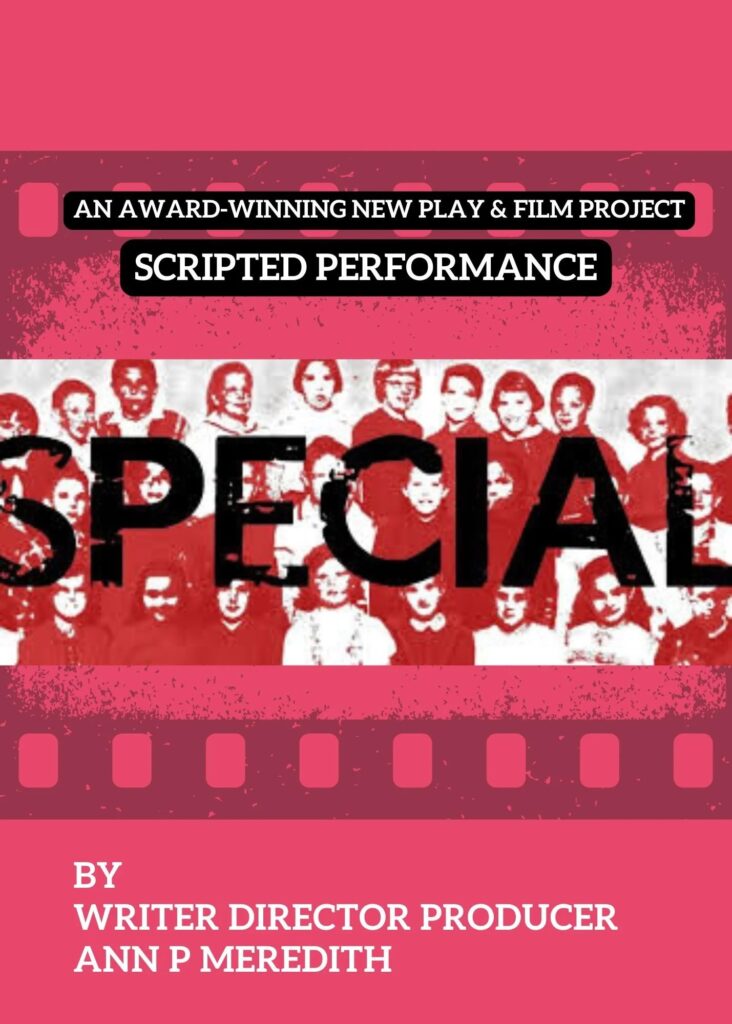
Alongside SPECIAL, Meredith continues to develop other projects. Her earlier work, “Forgotten Angels,” which focuses on lesbian nurses in the Vietnam War, remains close to her, and she is planning a scripted reading of both that piece and SPECIAL as part of an ongoing effort to bring the material to wider audiences. She is also revisiting a series of photographs she took of cowgirls in New Mexico, with the intention of compiling them into a book titled Tall in the Saddle, a return to a subject that has long occupied her imagination.
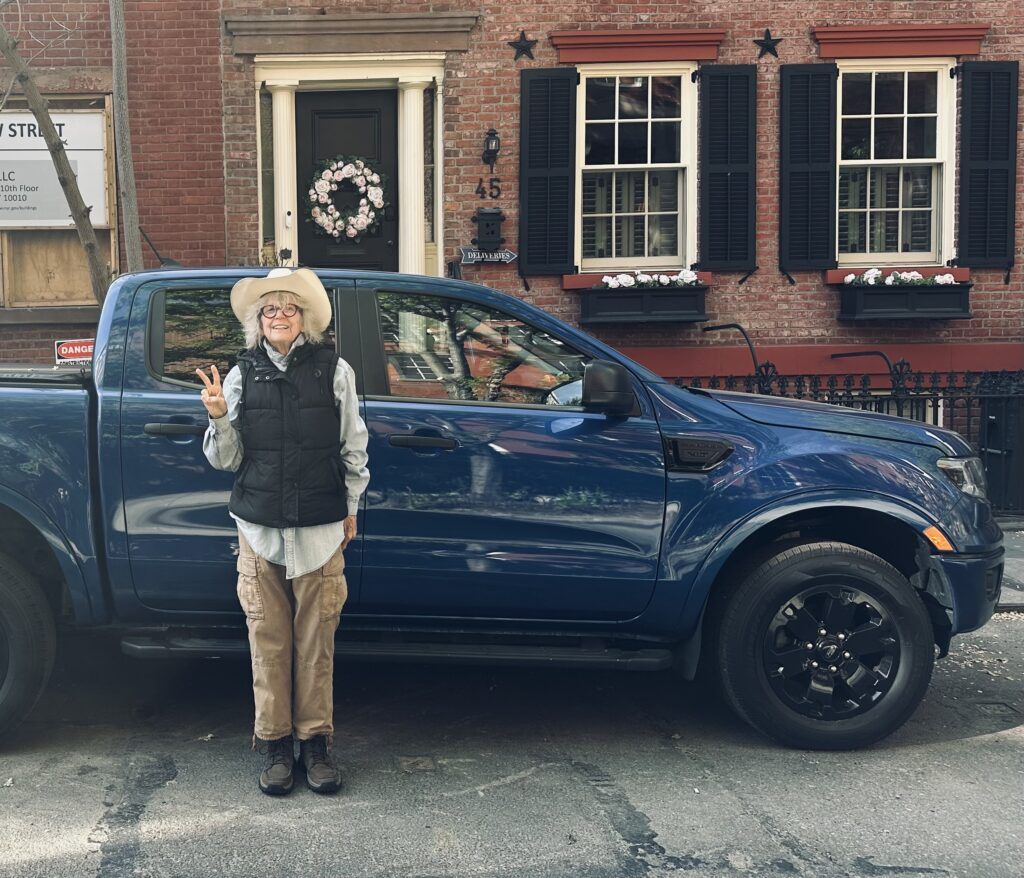
This fall, she plans to drive across the country—from New York City to Los Angeles—in her pickup truck, which she has named Bear. The trip will include a stop in Albuquerque, a place she associates not only with past work but with the possibility of new collaborations. The journey, like much of her life, is both practical and symbolic: a movement across space that mirrors a longer movement across time.
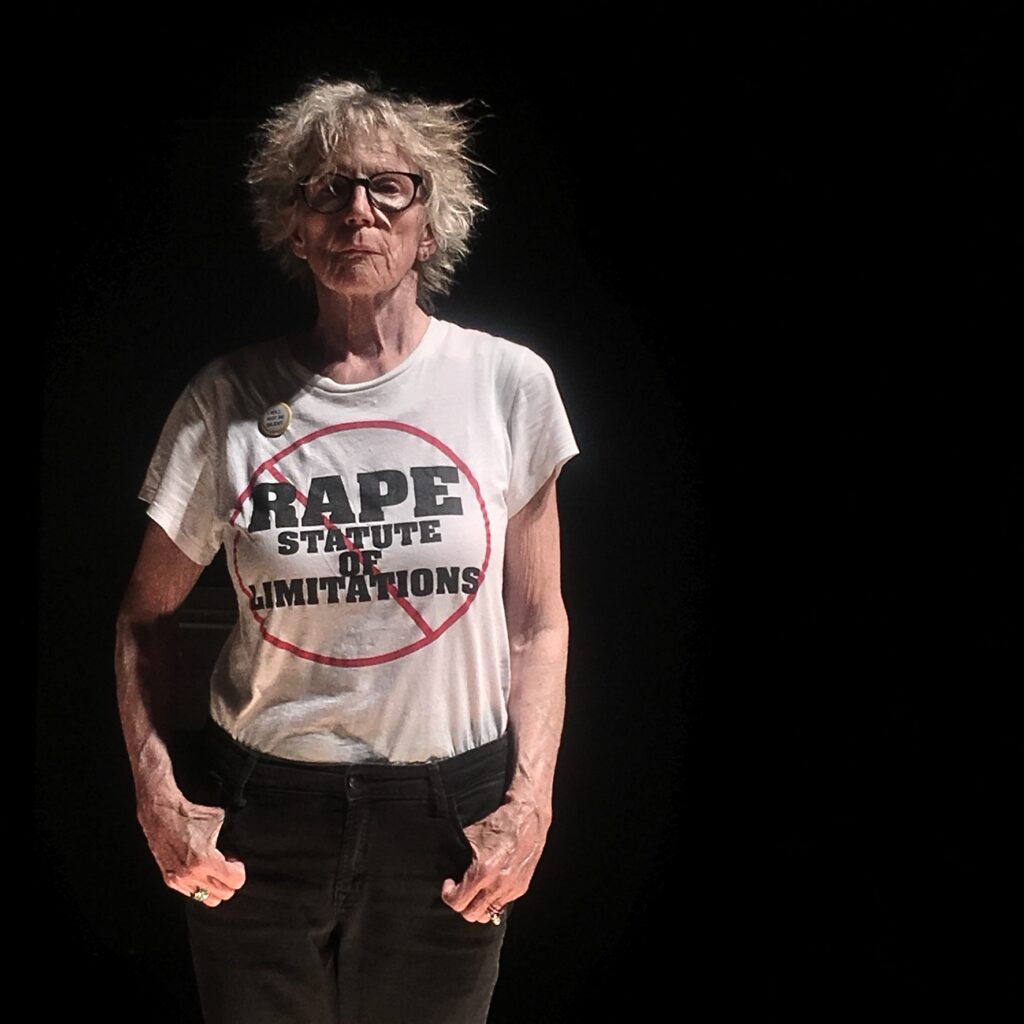
Meredith does not speak of her work in terms of legacy. She frames it instead as necessity, an ongoing response to conditions that have not fundamentally changed. The statistics she cites—one in three women and one in six boys experiencing sexual violence before the age of eighteen—are not, for her, distant figures. They are the context in which all her work exists.
If there is a unifying principle across her projects, it is the belief that stories, when told and heard, can alter the conditions that produced them. Not quickly, and not completely, but in ways that matter. The work of healing, in her view, is collective as much as individual. It requires community, language, and tools—structures that make it possible for people to move, however incrementally, toward something different.
The voice she heard on Fire Island offered a kind of certainty: that her purpose was to make a film that could help others heal. Nearly three decades later, that certainty remains intact. The film is not yet finished, but the work continues. For Meredith, that is the point. The world may be difficult, even unforgiving. But difficulty, she has long believed, is not an argument for stopping. It is an argument for continuing.
Want to support queer women doing the work?
📰 Subscribe to Your Lesbian World
🌐 Visit LesbianEarth.com
❤️ Support Lesbian+ and Queer Women businesses
🎉 Support Lesbian and Queer Women Events
❤️ Say yes to something rooted, real, and built by us
We don’t need permission to exist.
We just need each other.
With love and fire,
Your Lesbian World / LesbianEarth