The Rise of Self-Sustaining Lesbian Hubs
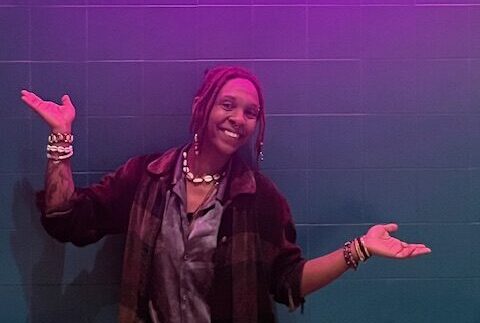
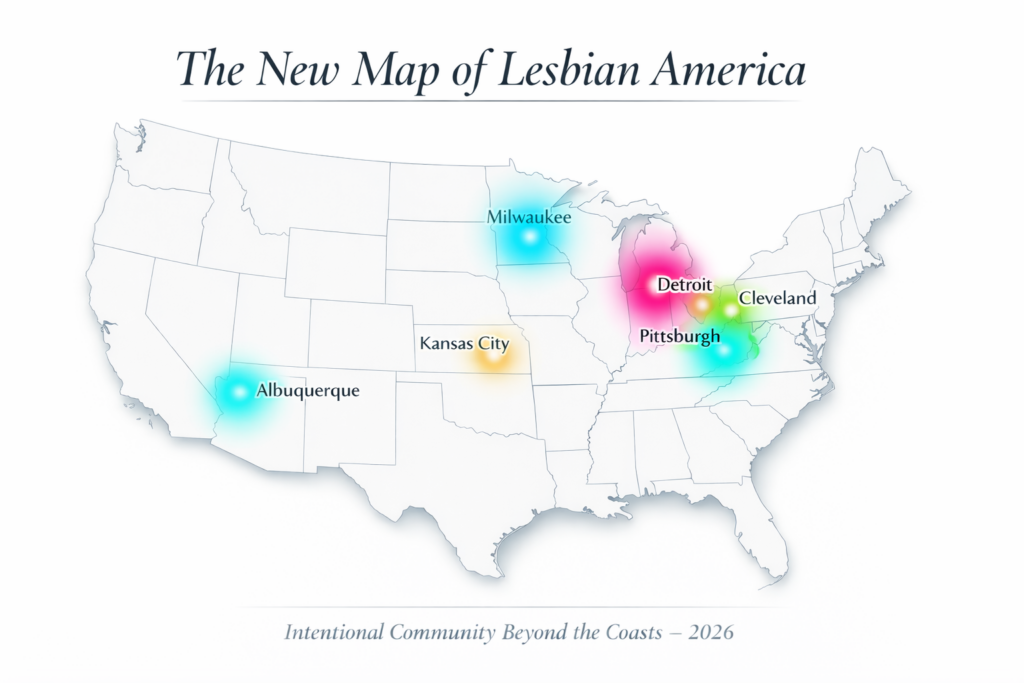
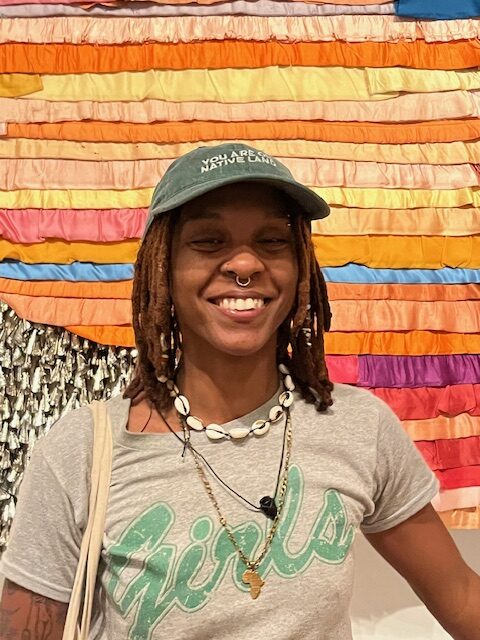
Some journalists observe history. Others step into it. Krys Cerisier belongs to the latter. Rooted in the Bronx, New York and connected across the Caribbean and Latin America, her work bridges grassroots organizing, global policy, and queer women’s liberation — reminding us that the stories we tell shape the futures we build. I sat down with her to explore what she uncovered while crossing America — the tensions, the resilience, the quiet organizing, and the fierce hope rising in communities determined to define their own future. Krys is wrapping up her journey through what many coastal media outlets still call “flyover states” — cities like Cleveland, Detroit, Kansas City, Pittsburgh, and Albuquerque — asking a simple but urgent question:
What does it mean to be a lesbian or queer woman in mid-size American cities right now in 2026?
What she found wasn’t silence.
It was movement.
And so, the question becomes larger than identity. It becomes structural:
Who gets to shape the spaces where lesbian and queer women’s life happens?
What’s happening in Pittsburgh suggests one answer.
There, Krys found a creative, arts-driven, community-centered lesbian space. This queer women space operates independently. It pays for itself through programming and rentals. It feels intentional. It feels rooted. And women gravitate to it because it feels safe.
But Pittsburgh isn’t isolated.
It’s part of a national pattern.
Across the country — from Cleveland to Kansas City, from Albuquerque to cities rarely covered in national queer media — lesbian and queer women are articulating the same three-part craving:
• Social space — rooms where we are centered, not peripheral.
• Political space — intentional organizing and strategy in a volatile national climate.
• Dating space — because at the core, we still want to meet each other in real life.
This isn’t nostalgia.
It’s evolution.
For years, many lesbian spaces disappeared. Some were absorbed into broader LGBTQ venues. Some closed because of COVID or economics. Some shifted culturally in ways that left women feeling unanchored.
Now women across generations — Gen X, Millennials, Gen Z — are saying something remarkably consistent:
We don’t just want inclusion.
We want intention.
Krys emphasized that the political dimension is urgent. “We can’t be casual about community,” she said. “The climate requires us to think strategically.”
And the social model is changing, too. Less bar-centered culture. Less heavy drinking. More sober-friendly gatherings. More art, workshops, hiking groups, book clubs, knitting circles, film screenings, ice cream socials. In some spaces — because alcohol isn’t the anchor. They are low-pressure. Accessible. Designed to feel safe rather than performative.
Interestingly, Krys noticed something else: some younger gay men are attending these gatherings as well. They, too, are fatigued by hyper-sexualized club environments. They’re seeking connection, creativity, and calmer community spaces.
There is also a clear shift happening structurally. Pop-ups and Meetups are no longer enough. Third spaces are evolving into something more permanent, more intergenerational. The vision is not just a party — it’s a hub. A place where younger women, midlife women, and elders can gather, organize, date, and create culture together.
Krys was particularly struck by the creativity in these so-called “flyover” cities.
In New York, she noted, you can announce something happening on Friday night and people will show up. In smaller cities, it doesn’t work that way. Events must be intentional. The themes are thoughtful. The music is curated, the programming imaginative. There are sleepovers, themed dances, art nights, political teach-ins, outdoor adventures, and yes — even ice cream socials.
These communities are not waiting for permission. They produce culture.
And the momentum is building. In Kansas, a major lesbian and queer women’s gathering is scheduled for September, drawing energy from across the region. It signals something bigger than a single event. It signals scale.
What Krys witnessed across these cities was not decline.
It was design.
A younger generation is reimagining what lesbian space looks like — less alcohol-driven, more values-driven. Less reactive, more strategic. Less fleeting, more rooted.
Because beneath everything — the politics, the art, the organizing, the dating — the desire remains simple and powerful:
To meet each other.
To protect each other.
To build something that lasts.
And that movement is no longer coastal.
It’s national.
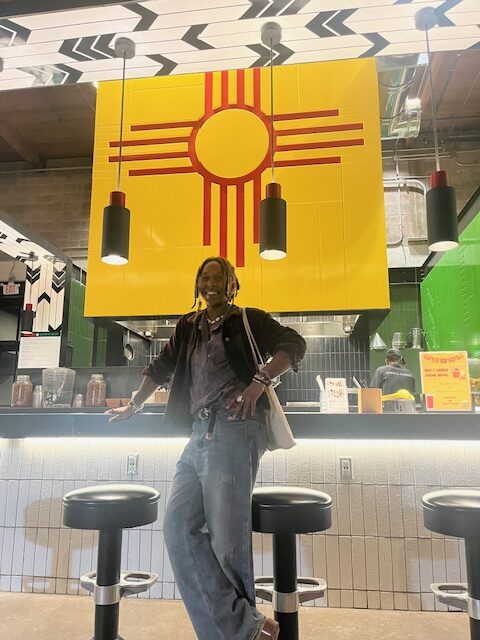
Rising Voice, Global Vision: Krys Cerisier
Krys Cerisier is not just reporting on history — she is helping shape it.
A Haitian Panamanian organizer and journalist from the Bronx, New York, Krys brings a fierce, grounded lens to U.S. foreign policy in Latin America and the Caribbean, LGBTQIA+ rights, and Black and Indigenous movement building. Her work lives at the intersection of global politics and grassroots resistance — where lived experience meets public policy.
A graduate student at the Craig Newmark Graduate School of Journalism at CUNY, Krys is trained in narrative journalism with deep expertise in longform storytelling, field reporting, and editorial writing. She has covered international conferences, public policy issues, and emerging media trends — including the rapidly evolving intersection of artificial intelligence and journalism.
But what makes her voice magnetic isn’t just technical skill.
It’s lineage.
“My name is Krys Cerisier and I am a first-generation Afro-Latina born and raised in the Bronx/Harlem. My journey into community organizing and social justice began with supporting the Land Back Movement with Afro Indigenous communities in Latin America.”
That origin story matters.
Krys currently works as a community organizer at VOCAL New York, a statewide grassroots membership organization building power among low-income people directly impacted by HIV/AIDS, the drug war, mass incarceration, and homelessness. In that role, she doesn’t just write about justice — she builds it.
Her skill set spans:
• Grassroots organizing and base-building
• Leadership development and movement strategy
• Coalition building across advocacy networks
• Event planning at local and international levels
• Public relations and media campaigns for social justice organizations
• SEO-aware, audience-driven web content
• Reporting on technology and media transformation
In an era when media can feel disconnected from community, Krys represents something different: journalism rooted in lived reality, coalition work grounded in dignity, and storytelling that amplifies Black, Indigenous, queer, and diasporic voices across borders.
She understands that movements are built through narrative.
And that narrative is power.
Want to support queer women doing the work?
📰 Subscribe to Your Lesbian World
🌐 Visit LesbianEarth.com
❤️ Support Lesbian+ and Queer Women businesses
🎉 Support Lesbian and Queer Women Events
❤️ Say yes to something rooted, real, and built by us
We don’t need permission to exist.
We just need each other.
With love and fire,
Your Lesbian World / LesbianEarth