A Gen Z Global Revolt Against Corruption
From South Asia to Africa and the Middle East, a growing wave of protests did not begin with ideology. They began with exhaustion—fed by corruption made visible and carried forward by symbols that traveled faster than power.
Across much of the world, young people found themselves educated but unemployed, visible online but invisible to power, surrounded by wealth they could see but would never touch—and by corruption they could no longer ignore. They watched political elites reward their own, flaunt privilege, and govern as if accountability were optional. When they took to the streets in 2024, it was not to announce a revolution. It was because nothing else seemed to move, and corruption had begun to feel permanent.
What followed surprised even seasoned observers. In a matter of months, youth-led protests spread across continents, borrowing tactics, symbols, and language from one another at the speed of social media. Governments fell. Others panicked. And a generation long described as apathetic revealed something far more dangerous to the status quo: coordination.
From South Asia to Africa and the Middle East, youth-led protests have continued to ignite—sometimes suddenly, sometimes after months of quiet pressure. They are not centrally organized, yet they echo one another with uncanny precision. Across borders and regimes, young people are responding to the same forces: corruption entrenched in daily life, economic exclusion, and governments that no longer appear accountable. Their demands are not theoretical. They are brutally concrete.
Jobs.
Dignity.
An end to corruption.
A future that didn’t feel like a lie.
By 2025, governments had fallen.
Ground Zero: Bangladesh’s July Revolution
The spark ignited in Bangladesh in July 2024, when students protesting restricted job opportunities were met with extraordinary state violence. What began as campus demonstrations escalated into a nationwide uprising after security forces cracked down on protesters, journalists, and bystanders.
According to Amnesty International, the government’s response amounted to severe human rights abuses. More than a thousand people were killed in the weeks that followed—students, reporters, ordinary citizens caught in the sweep of repression.
Instead of suppressing the movement, the violence radicalized it.
Videos flooded social media. Names were recorded. Evidence was preserved. When the government shut down the internet between July 18 and July 28, anger did not dissipate—it incubated. When connectivity returned, the protests came back sharper, angrier, and more disciplined.
Within weeks, Prime Minister Sheikh Hasina fled the country. An interim government replaced the old regime.
For Gen Z activists across continents, it was a revelation: a student-led movement had forced a modern state to retreat.
Nepal: When Corruption Became the Unifying Language
The shockwaves moved fast.
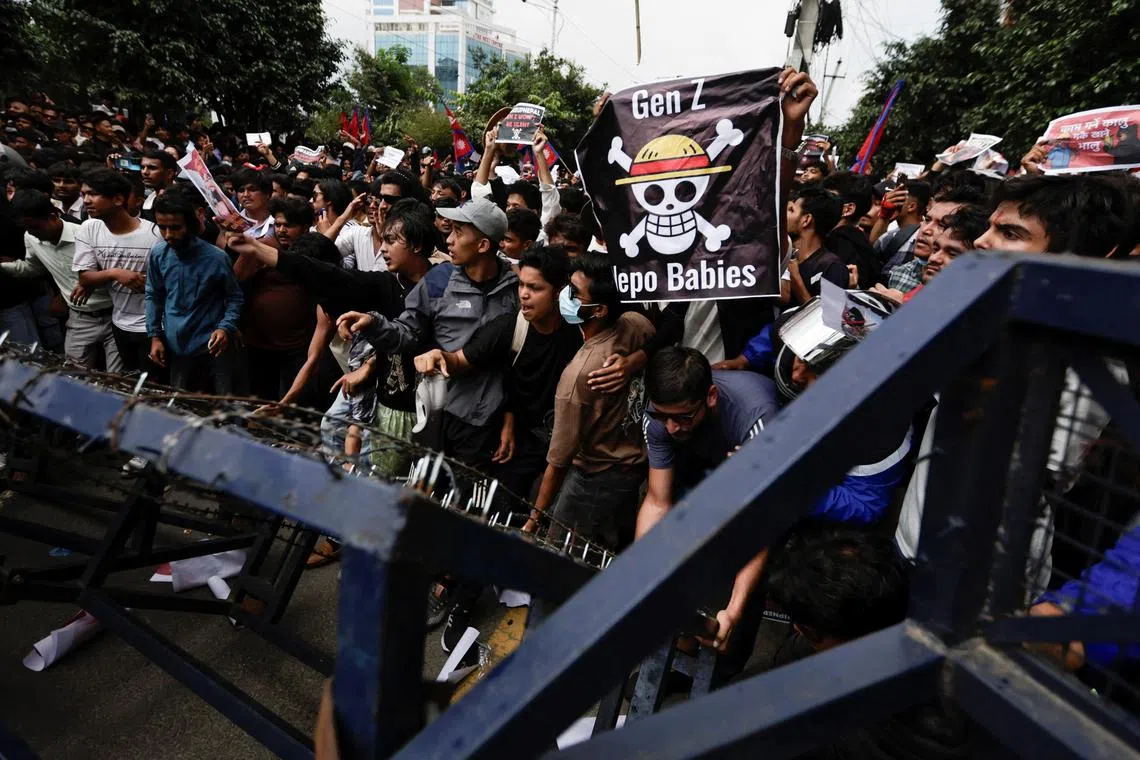
In Nepal, protests coalesced around a single word with universal resonance: corruption. Demonstrators targeted political elites accused of abusing public office while broadcasting obscene wealth online—luxury cars, extravagant parties, children of power flaunting lives unreachable to a generation locked out of work.
The contrast went viral.
When the government threatened to restrict social media, protesters interpreted the move not as public safety, but as authoritarian control. The backlash intensified. The ruling coalition ultimately collapsed.
The lesson was unmistakable: single-issue movements—especially anti-corruption—travel exceptionally well online. They are morally legible, politically unifying, and nearly impossible to spin.
Revolutions Now Have Branding
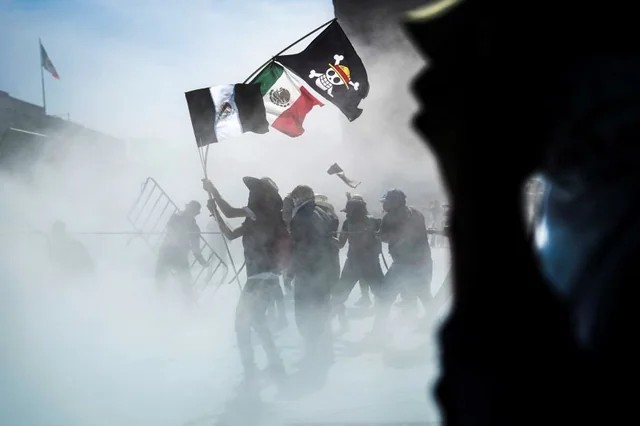
As Nepal’s historic Singha Durbar complex burned, protesters hoisted a flag that looked, at first glance, almost surreal: a cartoon skull wearing a straw hat, hung against the palace’s ornate golden gates.
The image came from One Piece, created by Eiichiro Oda. Its hero, Monkey D. Luffy, is a pirate who defies a corrupt world government, liberates oppressed people, and refuses to surrender—even when capture seems inevitable.
For Gen Z, the meaning was immediate.
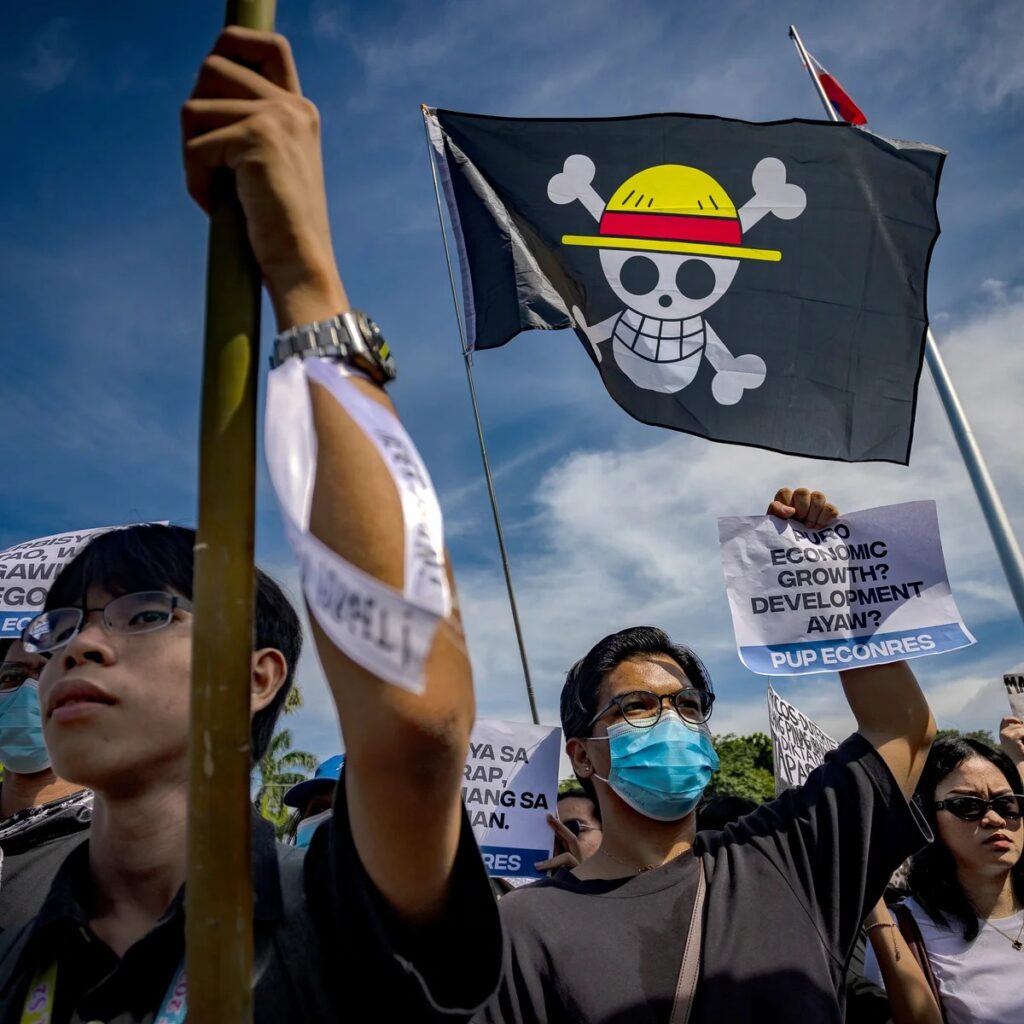
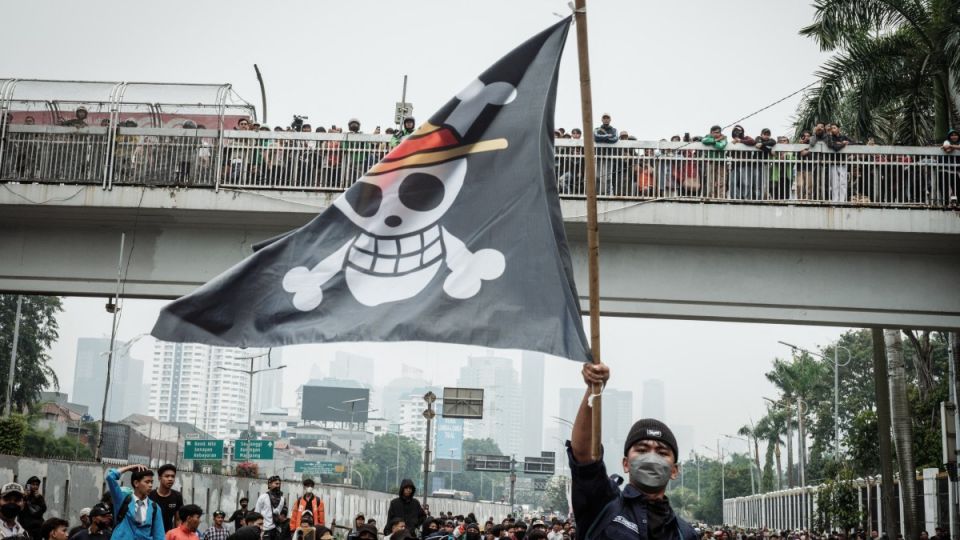
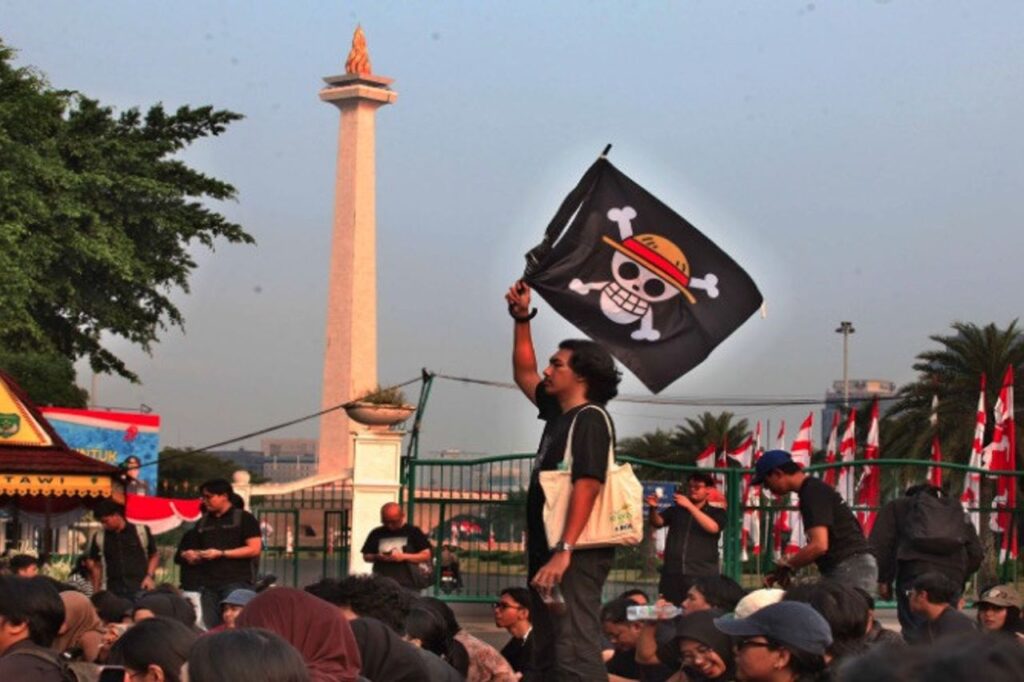
The straw hat flag has since appeared in protests across Nepal, Indonesia, the Philippines, and even Paris. It is visually bold, emotionally legible, and globally fluent. It compresses a complex political message into a single, shareable image—one that needs no translation.
Governments noticed. In Indonesia, officials accused protesters flying the flag of treason. Authorities seized banners and erased murals, prompting condemnation from Amnesty International. Each attempt to suppress the symbol only amplified it.
In the algorithmic age, Gen Z has learned an old lesson with modern tools: control the symbol, and you control the story. Revolutions no longer wait for historians. They brand themselves in real time.
Kenya: When Visibility Became Accountability
In Kenya, the movement took shape around a death.
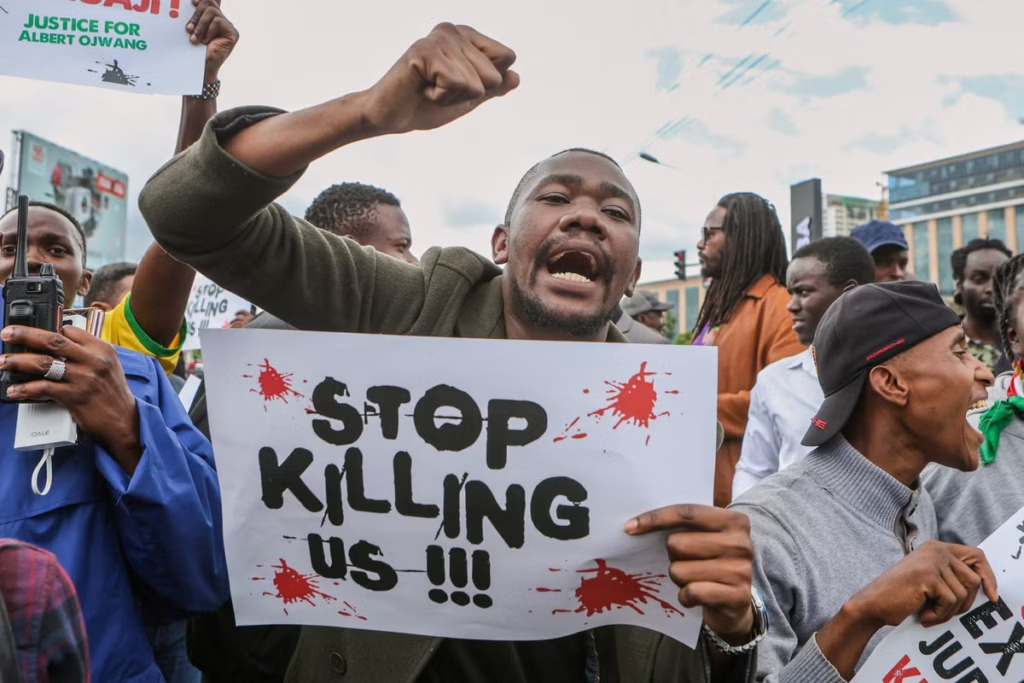
In 2024, a young teacher and online activist, Albert Ojwang, was arrested after criticizing senior police officials on social media. He later died in police custody. Authorities claimed he had harmed himself. An autopsy told a different story.
Outrage exploded. Protests surged. Eventually, multiple police officers and civilians were charged in connection with his death.
The message resonated far beyond Kenya’s borders: visibility is power—and social media makes disappearance harder.
From Dhaka to Kathmandu to Tehran, the pattern is unmistakable: when corruption hardens into daily life, young people organize—quickly, visually, and across borders—using the same Gen Z blueprint that has already forced power to bend elsewhere.
Iran: A New Front in the Global Youth Uprising
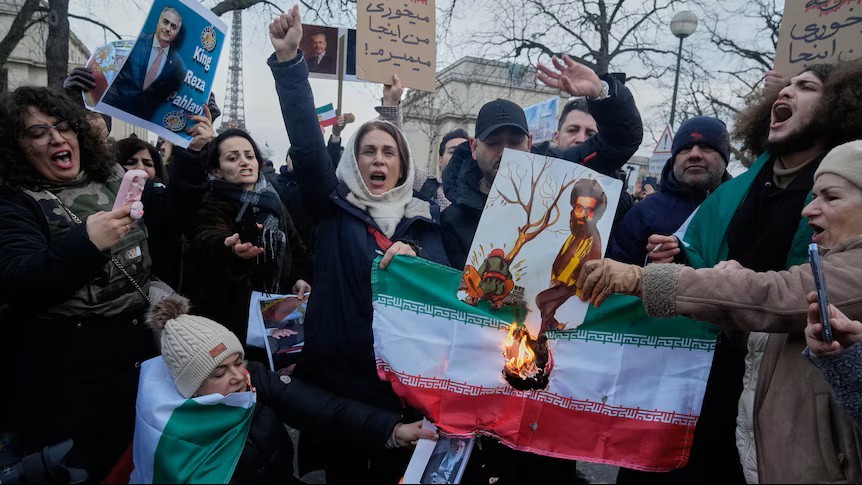
In late December 2025, protests flared across Iran, initially driven by everyday frustrations: soaring inflation, plummeting currency value, and rising food prices that left households unable to survive. But as demonstrators took to city streets from Tehran to provincial towns, their anger crystallized around a deeper grievance — a system they saw as corrupt, self-serving, and unaccountable to its people. Rather than mere economic hardship alone, it was perceived corruption embedded in political and economic power that helped transform local unrest into nationwide opposition to the ruling establishment.
The government’s response was stark: nationwide internet and phone blackouts, heavy security force deployments, and deadly crackdowns that have reportedly killed hundreds of demonstrators. Despite these measures, protest activity has spread across all 31 provinces, with students, shopkeepers, and bazaar merchants joining a movement that now articulates broader demands for justice, dignity, and systemic change — not unlike the anti-corruption protests that toppled governments in South Asia.
This Iranian uprising aligns with the emerging Gen Z blueprint seen globally: when young people confront both economic exclusion and entrenched corruption, their movements don’t stay local. Instead, they amplify across screens and streets, gaining coherence and force through shared symbols and shared grievances — even under blackout conditions.
Why This Moment Is Different
Youth-led movements are not new. The Vietnam War protests. The Arab Spring. Iran’s 2022 uprising after the death of Mahsa Amini.
What has changed is speed.
During the Arab Spring, a tweet could take hours to circle the globe. Today, a video can cross continents in minutes. A symbol posted in Kathmandu can be replicated in Jakarta by nightfall and referenced in Paris before dawn.
Revolutions now move at the pace of platforms.
Why the Wave Hasn’t Fully Broken in the West
Large protests have erupted in the United States and Europe—around Gaza, climate change, and inequality—but they remain fragmented, ideologically polarized, and less unified around a single, universal grievance like corruption or economic exclusion.
Meanwhile, figures such as Donald Trump have mastered algorithmic intimacy—using podcasts and grievance-based storytelling to create emotional loyalty without collective purpose.
The result is noise without cohesion.
The 2026 Blueprint
Governments are watching closely—and growing anxious.
Australia has already restricted social media access for users under 16. Other countries are exploring similar policies. History suggests such efforts often backfire: attempts to suppress digital organizing tend to accelerate it.
The blueprint is now clear:
A shared grievance
Youth leadership
Visual, portable symbols
Platform fluency
Relentless documentation
This is not chaos.
It is coordination—often without a central leader.
The Truth Power Can No Longer Ignore
Every generation has a moment when it realizes the system will not save it.
Gen Z has reached that moment.
They are not waiting.
They are not logging off.
And in country after country, they are proving that when young people organize clearly, visibly, and together—power moves.
The question is no longer whether this movement will return in 2026.
The question is where—and whether those in charge will recognize the symbols before it’s too late.