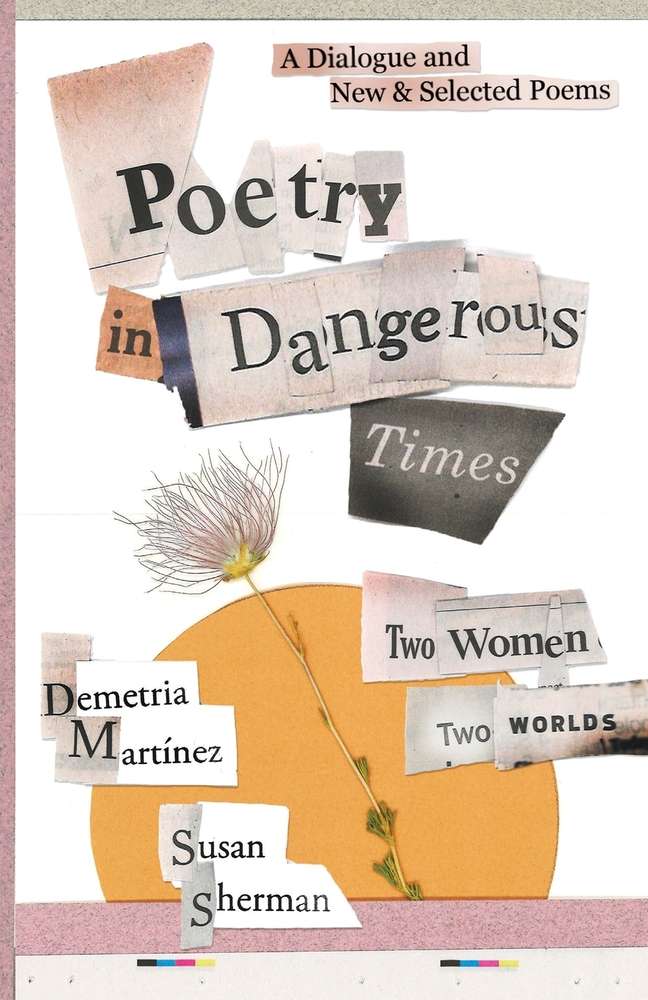
The Story of Poetry in Dangerous Times: Two Women, Two Worlds
A poet surprised me when she said she posts nothing but poems on social media these days because “everything else is too dangerous.”
What is more dangerous than poetry? Its undeniable truth—succinctly and beautifully told—is so powerful that poets are often prime targets of repressive regimes. Historically, that makes poetry a far more dangerous post than any meme or commentary.
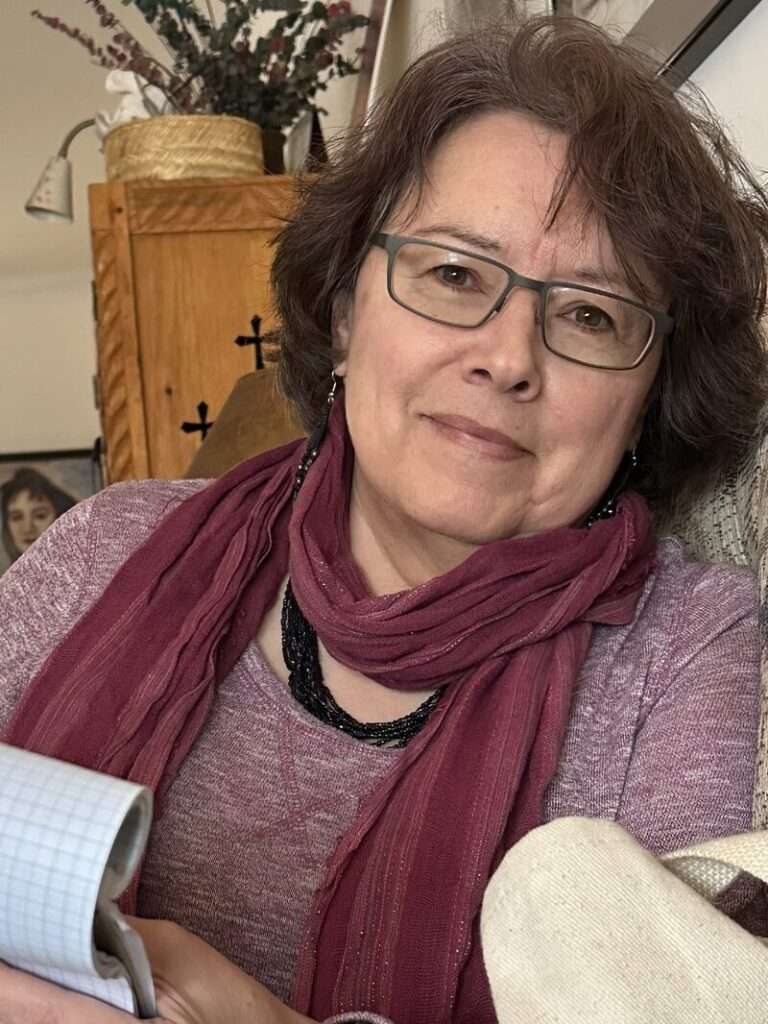
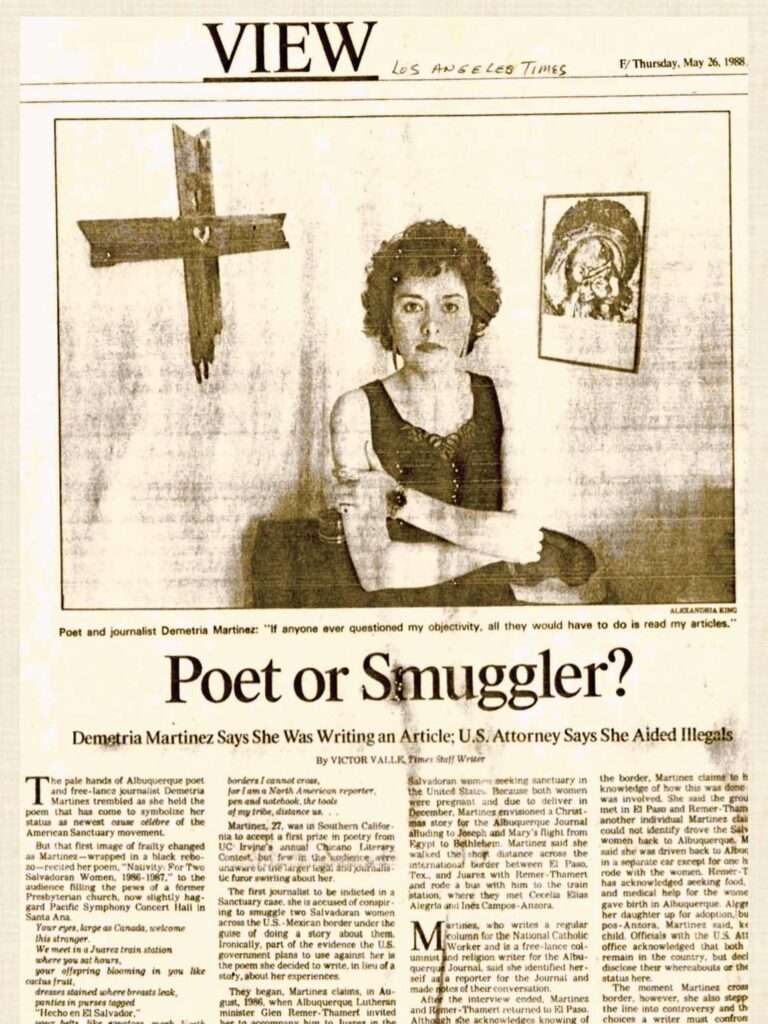
Demetria Martinez is a poet, for example, whose poem was entered as evidence at her federal trial when she was charged with conspiracy against the government during the Reagan years. “Nativity: For Two Salvadoran Women, 1986-1987” was written when she was a journalist accompanying a minister driving two pregnant women from the border into New Mexico as part of the Sanctuary movement.
Luminaries like Allen Ginsberg and Tony Hillerman came to her defense and she was ultimately acquitted on First Amendment grounds. She is one of two courageous poet/activists who survived committing poetry in dangerous times.
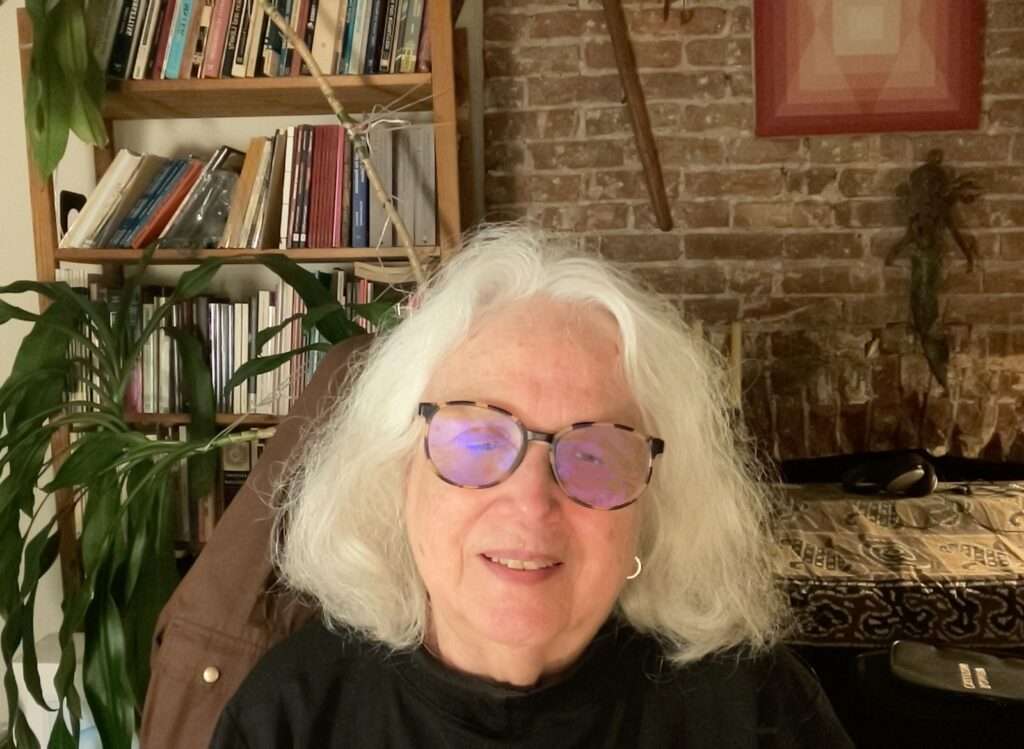
The other is Susan Sherman, who boldly published Lesbian/feminist poetry back when Lesbian activists risked a visit from J. Edgar Hoover’s FBI. “Nobody wanted to talk to them,” she says. “If you answered one question, you’d have to answer all. They tried to get a list of people in the movement. If you refused to talk, you could be summoned before a Grand Jury—or jailed.”
She already had experience with government repression when she returned from the Cultural Conference in Havana in 1968. She lost her job and the distribution of the first series of IKON magazine, of which she was founder and editor.
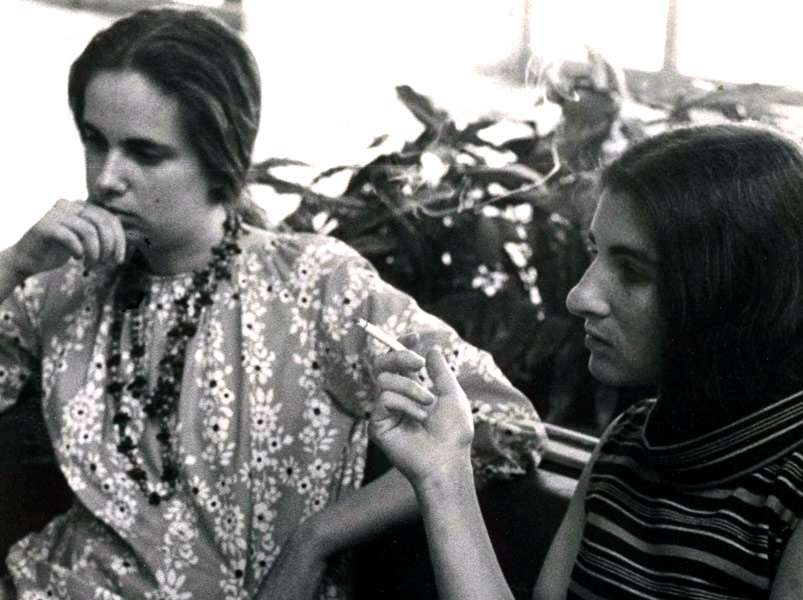
“The Sixties were a very dangerous time,” she continues. “Back then, those below a certain income level ended up in jail, and those of us above a certain income level were committed” (for psychiatric treatment).
By reminding us of dangerous times past that we survived, these two brave women stiffen our spine for the danger we’re navigating now. Yet their poems have the tenderest images, whether speaking of revolution or love reviled:
Dreams opening
Like the fist of an infant
– Demetria Martinez
(from “The Dress Daisy Gave Me”)
We met on a hilltop in Vermont made love
in the sweetgrass of our desire
– Susan Sherman
(from “There Was A Woman Once”)
Before reading one line of their poetry, they treat us to a conversation between them that reveals the backstory of their lifelong art and activism. In the opening “Two Women, Two Worlds: A Dialogue,” Demetria and Susan discuss the very different generations, locations, religions, and cultures that shaped them.
Demetria, an Albuquerque-born Chicana, has deep roots in New Mexico. After graduating Princeton in 1982, she returned home. Six years later, she was on trial in the Albuquerque federal courthouse. Had she lost her case, she would have been sentenced to twenty-five years in federal prison. After her acquittal, she was featured in Ms. magazine with a picture of her emerging triumphant from the courthouse, fist in the air, surrounded by smiling family.
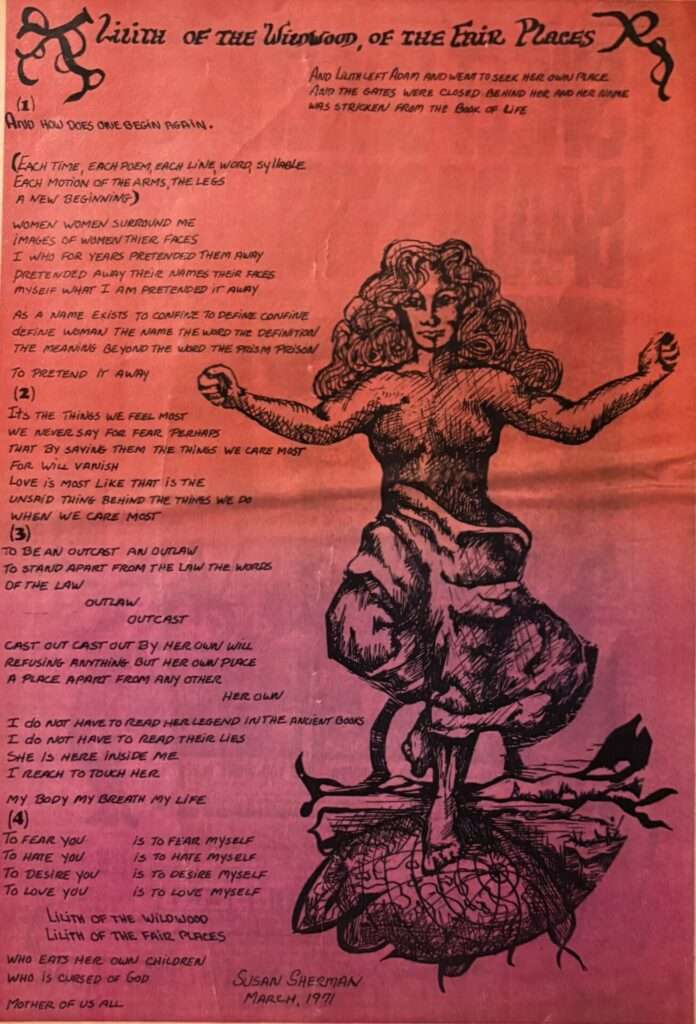
Family, faith, and community sustained her throughout the ordeal. Mark Rudd, an Albuquerque resident who had been a leader of SDS and the Weather Underground, returned to his alma mater, Columbia, where he encountered Allen Ginsberg. Rudd told Ginsberg, an ardent free speech advocate, about Demetria’s plight. On his own dime, Ginsberg flew to Albuquerque and hosted a fundraiser for her and her co-defendant’s legal expenses. Demetria opened the show at the Kimo Theater with “Wanted,” a poem she wrote in response to Ginsberg’s “America” as part of her introduction of the famous poet. Both “Wanted” and “Nativity” are included in Poetry in Dangerous Times.
Demetria is still sustained by family, faith, and community, but also by the loving support of her wife for whom she wrote the poem, “Marriage, for Camilla,” and by Zooming every Friday to workshop poems with her long-time friend and co-presenter, Susan Sherman, in New York City.
Susan revived IKON as a feminist magazine in 1985. She was a former poetry editor for The Nation and The Village Voice, and writer of the acclaimed memoir, America’s Child: A Woman’s Journey Through the Radical Sixties. She says she and Demetria began the virtual workshopping to “get out of the funk” and it was from those “de-funking” meetings that Poetry in Dangerous Times emerged. It contains both new poems and poems selected from their past repertoire.
Susan grew up in California in an immigrant Jewish family, and graduated from UC Berkeley in 1961, (one year after Demetria was born). She began writing poetry while at Berkeley, and after graduation moved to New York City to be part of its thriving poetry scene. “I was out in 1962,” she says. That was seven years before Stonewall and eleven years before homosexuality was removed from the DSM: dangerous times for lesbians.
During those years, Alan Katzmann told Susan about the now iconic—but then lesser known—Lilith. People knew Lilith as Adam’s first mate, but she left him and was banished by God. Specifically, Katzmann told her a story from Polish folklore, that people would write things on the walls when babies were born to keep Lilith from stealing the baby’s soul.
Susan saw Lilith as the outlaw, a symbol of lesbian women cast out, forced underground.
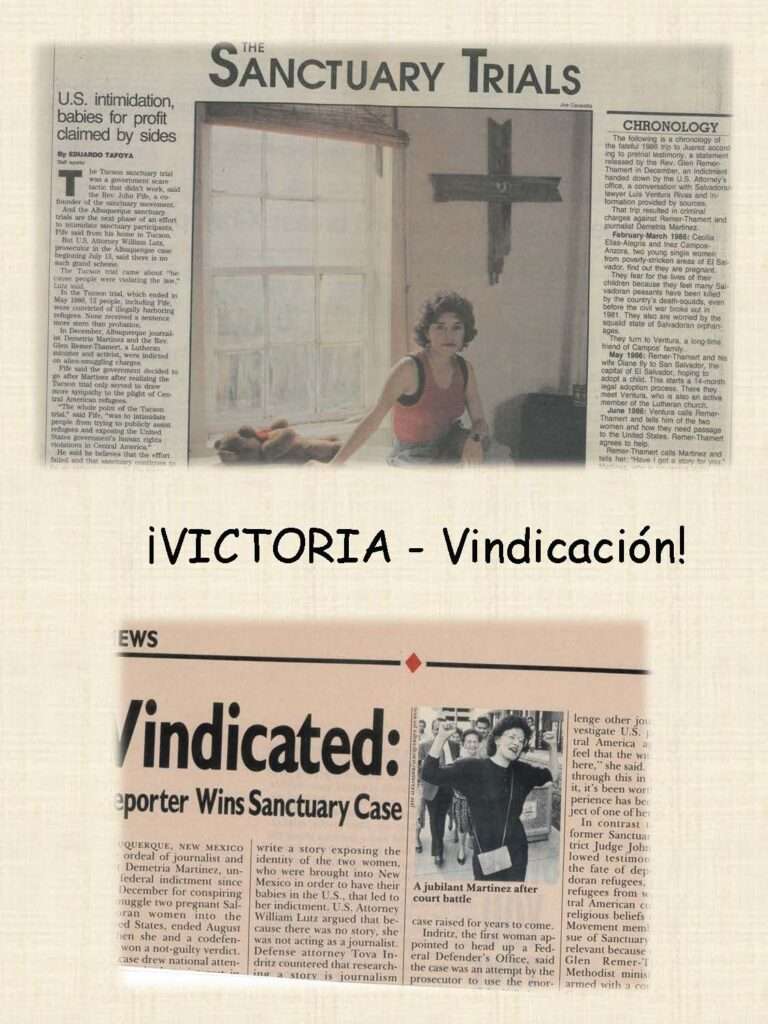
Rat Subterranean News was taken over by women and renamed Women’s LibeRATion. It was there Susan chose to publish her poem “Lilith of the Wildwood, of the Fair Places.” It was their practice to publish anonymously, but she insisted they use her name. “No, I want my name on it,” she told them. “Women have been shut out of publishing and made invisible long enough.” So while homosexuality was still in the DSM, she published:
women women surround me
images of women their faces
I who for years pretended them away
pretended away their names their faces
myself what I am pretended it away
-Susan Sherman
(from “Lilith of the Wildwood, of the Fair Places”)
As Cherrie Moraga says of Poetry in Dangerous Times, “Theirs is a poetics that speaks to the privilege and burden of walking one’s truth.” Yes. And doing so—again—in dangerous times.
Mary Oishi, Poet Laureate of Albuquerque (2020-2022), is the author of three poetry collections, most recently Sidewalk Cruiseship (University of New Mexico Press, 2024) and is Editor of the 2023 New Mexico/Arizona Book Award-winning anthology, One Albuquerque, One Hundred Poets. Her work appears in journals and anthologies internationally, including in translation. Among recent publications: Thimble Literary Magazine and Sense and Sensibility Haiku Journal. She is currently working on a memoir.