Chris Armstrong on Community, Scholarship, and Choosing Hope
There are people who seem to carry hope with them. Not the naïve optimism that ignores hardship, but the quieter kind—the belief that even difficult work is worth doing because people are worth believing in. Chris Armstrong is one of those people.
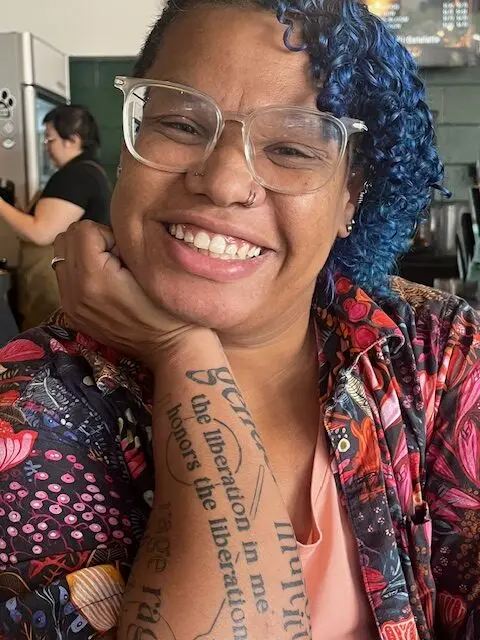
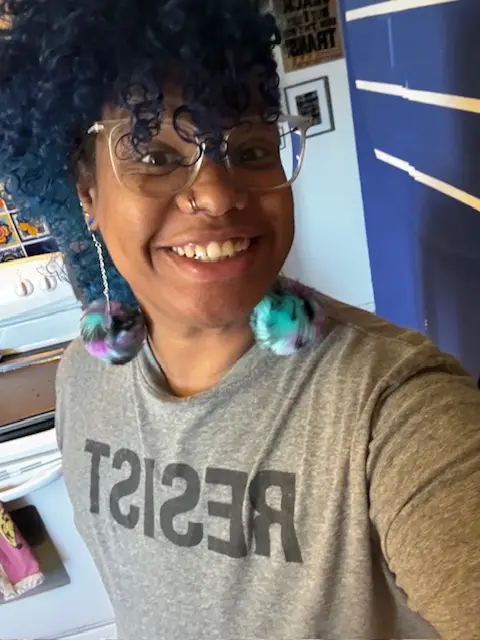
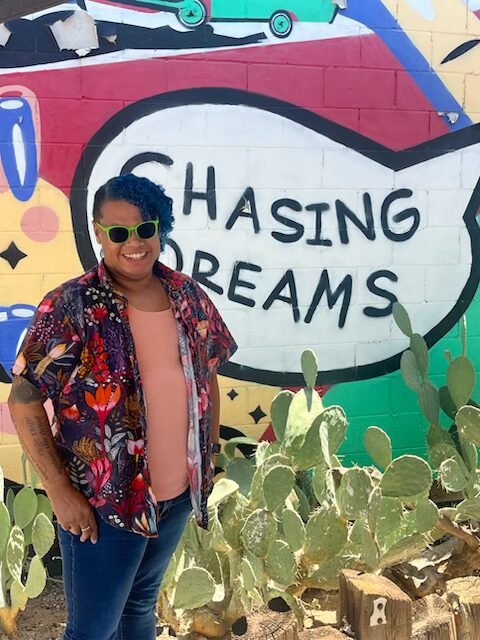
When we met, they greeted me with an easy smile framed by bright blue hair that somehow felt perfectly natural. It wasn’t an attempt to stand out. It was simply Chris being Chris. Within minutes, the conversation drifted from community to poetry, from public health to friendship, from the challenges facing transgender people to the small moments of kindness that make neighborhoods feel like home. Nothing about the conversation felt rushed.
What the Headlines Missed
Chris speaks the way many people write after spending hours editing their thoughts—carefully, thoughtfully, always searching for the most generous interpretation of another person’s experience. Even when discussing discrimination or the growing political pressures facing transgender communities, their instinct is not to retreat into cynicism. Instead, they return again and again to possibility.
Hope, it turns out, is something they practice.
That outlook has become the foundation of a life devoted to learning, advocacy, and community.
Chris recently completed a master’s degree and has begun a Ph.D. in Health Equity Sciences, a field dedicated to understanding why health outcomes differ across communities and how those inequities can be addressed. As a Black, trans, nonbinary human, they know that data is never just data. Behind every statistic is a person whose life has been shaped by the systems surrounding them—systems that can either create opportunity or reinforce inequality.Their academic work reflects that understanding, but scholarship is only one part of who they are.
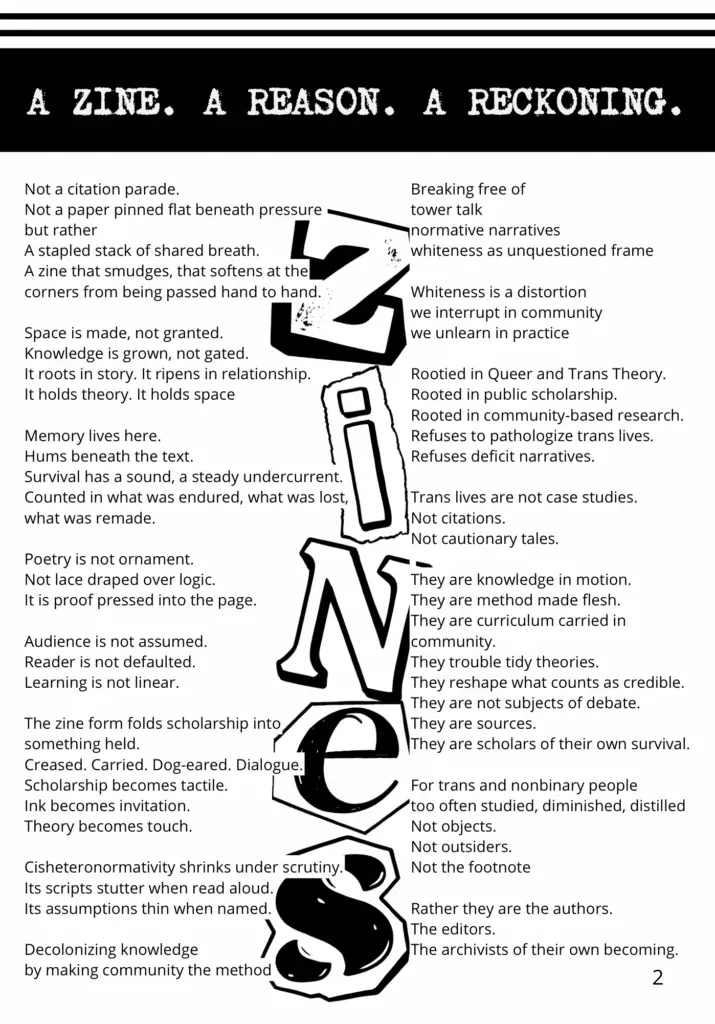
Outside the classroom, Chris is an advocate, an artist, and a builder of community. During the past year alone, they created ten self-published zines, combining poetry, essays, artwork, and personal reflection into handmade publications that invite readers to slow down and think. The projects are deeply personal, but they are also an acts of generosity—an invitation for others to see themselves in someone else’s story.
That impulse to connect people appears throughout Chris’s life.
Ask them about research, and they begin talking about relationships. Ask about policy, and they talk about neighbors. Ask about identity, and they return to community. It is a pattern that becomes impossible to miss.
For Chris, knowledge has never been an end in itself. Education matters because it gives people better tools to care for one another. Research matters because it can improve lives. Art matters because it helps people feel seen. Community matters because none of us were meant to navigate the world alone. That philosophy feels increasingly significant at a time when transgender lives are so often discussed through political arguments rather than personal stories.
Much of the public conversation reduces people to legislation, headlines, or social media debates. Chris quietly resists that reduction. Instead, they speak about friendship. About creativity. About belonging. About the ordinary, everyday experiences that make up a human life but are too often absent from public conversations.
Listening to Chris, it becomes clear that their work is not driven primarily by outrage, although they understand its place. It is driven by hope. –the conviction that communities become stronger when more voices are welcomed into them; the belief that research and lived experience belong together; the confidence that small acts of care can ripple outward in ways we never fully see.Those ideas would return throughout our conversation, whether we were discussing public health, creative work, or the future of LGBTQ+ communities in New Mexico.
By the time we finished talking, I realized we had spent surprisingly little time discussing accomplishments, degrees, awar
Chris Armstrong’s story is ultimately not just about earning a master’s degree or beginning a Ph.D. It is about choosing hope over fear, community over isolation, and love over indifference.
In a time when transgender lives are often reduced to political debate or headlines, stories like Armstrong’s remind us that real people are building communities, creating art, advancing research, and imagining a better future for everyone. Those stories deserve to be told—not because they are extraordinary, but because they reveal the everyday courage of living authentically. Perhaps that is the lesson Armstrong hopes readers carry with them: You are loved. You are not alone. And hope—maybe the best of things—still has the power to change lives.
About LesbianEarth
LesbianEarth LLC is a privately held media and community company connecting lesbian+ and queer women through trusted journalism, local events, travel, and digital experiences.
Founded in Albuquerque, New Mexico. Building community worldwide.
Want to support queer women doing the work?
Subscribe to Your Lesbian World
Visit LesbianEarth.com
Support Lesbian+ and Queer Women businesses
Support Lesbian and Queer Women Events
Say yes to something rooted, real, and built by us
We don’t need permission to exist.
We just need each other.
With love and fire,
Your Lesbian World / LesbianEarth
© 2026 LesbianEarth. All rights reserved.
