How Valena Beety Connects the Dots Between Gender Tropes, Wrongful Convictions, and the Stories That Shape Justice
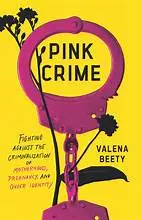
Most people assume wrongful convictions happen because investigators arrest the wrong person. Legal scholar, innocence attorney, and author Valena Beety believes the story is often far more complicated. After decades representing people seeking exoneration and studying why the criminal legal system fails, she began noticing patterns that extended far beyond individual cases. Pink crime – I recently sat down with Valena Beety to ask for an explanation about her new book, Pink Crimes. She’s using “pink” as a symbol for the people who are being criminalized—women, mothers, pregnant people, poor, immigrants, disabled, and queer people. In fact, a stunning 75% were convicted where there was no criminal act. Or to say it better about three-quarters of women who are later exonerated were convicted in cases where no crime actually occurred, which became the driving insight behind the book.
During our conversation, Beety explained why courtroom narratives can sometimes become more powerful than the evidence itself—and why recognizing those patterns is essential if justice is to remain grounded in facts rather than expectation.
Every Wrongful Conviction Begins with a Story
Criminal trials are supposed to answer a straightforward question: What happened? Evidence is gathered. Witnesses testify. Forensic experts explain their findings. Prosecutors and defense attorneys present competing narratives. Jurors weigh the facts and decide whether guilt has been proved beyond a reasonable doubt.
We trust that, although imperfect, the process is designed to uncover the truth. But after spending decades representing people seeking exoneration and studying wrongful convictions, Beety began wondering whether another question sometimes quietly slips into the courtroom. It is a subtle shift, she told me, but one that can fundamentally alter the pursuit of justice.
Once attention moves away from the evidence and toward a defendant’s character, assumptions about gender, sexuality, motherhood, race, poverty, disability, and respectability can become intertwined with the facts of the case. Those assumptions are rarely acknowledged openly, yet they can influence how investigators interpret evidence, how prosecutors build their arguments, and how jurors decide whom to believe.
That question lies at the heart of Pink Crime. An innocence attorney, professor, nationally recognized legal scholar, and author, Beety has devoted much of her career to understanding why the criminal legal system sometimes reaches the wrong conclusion. Along the way, she helped establish both the West Virginia Innocence Project and the Indiana Innocence Project, representing people seeking exoneration, teaching future lawyers, and examined the recurring patterns that appear across wrongful conviction cases.
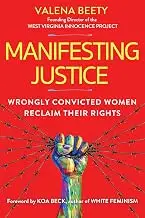
Her earlier book, Manifesting Justice: Wrongly Convicted Women Reclaim Their Rights, focused on women whose stories had too often been overlooked. Pink Crime widens the lens, asking readers to look beyond individual cases and examine the cultural narratives that connect them.
When I asked Beety what inspired her to write Pink Crime, I expected her to begin with a memorable courtroom case or a legal theory that had challenged her thinking. Instead, she answered with a phrase that surfaced several times during our interview. “I started connecting the dots.”
For years, she explained, she approached wrongful convictions one case at a time. Every case seemed different. Different defendants. Different prosecutors. Different judges. Different juries. But as she continued representing clients, studying trial transcripts, teaching, and writing, she gradually stepped back from the individual stories. Once she did, patterns that had once seemed isolated became impossible to ignore.
Women whose lives challenged traditional expectations often found themselves judged for far more than the crime they were accused of committing. Questions about their sexuality, appearance, relationships, parenting, and morality repeatedly surfaced in prosecutions where those issues had little relevance to the legal questions before the court. Instead of remaining background details, they became part of the story jurors were asked to evaluate.
“The more I looked,” Beety told me, “The more I kept connecting the dots.”What had once appeared to be isolated cases were, in her view, pieces of a much larger pattern. That realization became the foundation of Pink Crime.
Beety believes one of the most important shifts in a courtroom is often one of the quietest.The criminal legal system is designed to answer a factual question: What happened? Did a crime occur? What does the evidence show? Has the prosecution proved its case beyond a reasonable doubt? Character asks a very different question.
It asks whether someone appears honest, respectable, sympathetic, responsible, or morally acceptable. Those judgments are deeply human, but they are not the legal standard upon which guilt or innocence is supposed to be decided. “The question quietly changes,” Beety explained. It is no longer simply, What happened? It becomes, Who is this woman?
That shift can be remarkably powerful because it often happens without anyone recognizing it. Jurors believe they are evaluating evidence, while cultural assumptions quietly influence how that evidence is interpreted. Rather than focusing exclusively on the facts, prosecutors may introduce details about a defendant’s relationships, family life, financial struggles, appearance, sexuality, or parenting. Individually, each detail may seem insignificant. Together, they create a story that encourages jurors to evaluate the person sitting at the defense table rather than the evidence presented against them.
Beety is careful not to argue that every conviction involving a woman is unjust or that personal history should never be admitted in court. Her concern is the moment when evidence begins competing with identity.
That concern comes into sharp focus in one of the cases she examines in Pink Crime.
Brenda Andrew stood trial in Oklahoma for the murder of her husband. Like every criminal prosecution, the case should have centered on a straightforward legal question: Had the state proved beyond a reasonable doubt that Andrew committed murder?
Instead, Beety argues, another story gradually unfolded inside the courtroom. Jurors heard testimony about Andrew’s affairs. They learned about her clothing, her makeup, and even thong underwear found in her home. They heard details about her personal relationships and her role as a wife and mother. Much of that testimony had little to do with whether she committed the crime. Yet together it painted a portrait of the defendant’s character.
Beety’s point is not whether Brenda Andrew is innocent. Her concern is whether evidence about Andrew’s personal life began overshadowing the evidence relating to the crime itself. The prosecution, she argues, was no longer asking jurors only to determine whether Andrew committed murder. It was also inviting them to decide whether she was the kind of woman they respected. Was she faithful? Was she a good mother? Did she live the kind of life jurors believed a respectable woman should live? None of those questions appear among the legal elements of first-degree murder. Yet Beety believes they became part of the narrative surrounding the trial.
Years later, the United States Supreme Court unanimously concluded that lower courts had not adequately considered whether the admission of extensive evidence about Andrew’s sexuality and personal life deprived her of a fundamentally fair trial. The Court did not declare Andrew innocent or overturn her conviction. Instead, it ruled that the fairness of the proceedings deserved closer constitutional scrutiny.
For Beety, the importance of the case extends far beyond Brenda Andrew herself. It illustrates how easily a criminal trial can shift from asking What happened? to asking Who is this person?
Once that happens, she argues, character risks becoming evidence.
The Stories We Carry Into the Courtroom
Throughout our conversation, Beety returned to one central idea: courtrooms do not exist outside the culture that surrounds them.Jurors, investigators, prosecutors, judges, and defense attorneys all bring a lifetime of experiences, assumptions, and expectations into the courtroom. They do not suddenly become blank slates when a trial begins. Those assumptions are rarely malicious or even conscious. “They’re stories we’ve absorbed our entire lives,” Beety explained. “Most of the time we don’t even realize they’re there.”
In Pink Crime, she describes these as gender tropes—the cultural stories that shape our expectations of what a good mother looks like, how grief should be expressed, what makes someone appear trustworthy, and how women are expected to behave. To illustrate how persistent these expectations remain, Beety pointed to today’s “trad wife” movement. She wasn’t criticizing women who embrace traditional family roles. Rather, she was making a broader observation: every generation creates its own image of the “ideal woman.” Sometimes that ideal celebrates independence and professional success. Other times it emphasizes caregiving and domestic life.
The details change. The expectations remain. She also discussed the influence of the online “manosphere,” where rigid stereotypes about women continue to circulate. Again, her point was larger than any single movement or political ideology. Society is constantly debating what women should be. Those debates don’t stop at the courthouse door. They become part of the culture in which jurors evaluate credibility, investigators interpret evidence, and attorneys construct their arguments.
One example has stayed with me ever since our interview. If a woman cries during a criminal trial, her tears may be dismissed as manipulative. If she remains calm, that same composure may be interpreted as evidence that she lacks remorse. If she focuses on her career, she may be criticized for neglecting her family. If she devotes herself to her family, she may be portrayed as lacking ambition. “There is no winning,” Beety observed. That insight reaches beyond criminal law. It asks all of us to consider how easily unconscious assumptions shape our judgments of other people—often before we’ve fully considered the evidence.
As our conversation continued, I found myself thinking about another legal battle unfolding far from the wrongful conviction cases Beety examines in Pink Crime. The legal issues were different, but the underlying question felt strikingly familiar. A 2026 investigation by The New York Times examined how Uber has defended itself against thousands of sexual assault lawsuits. Publicly, the company has pledged to approach survivors in a “survivor-centric” and “trauma-informed” way. Yet the investigation reported that many plaintiffs were questioned extensively about deeply personal aspects of their lives, including what they were wearing, how much alcohol they had consumed, their sexual histories, childhood trauma, mental health records, and previous assaults.
According to the investigation, similar questioning occurred even in cases where drivers had already been convicted of sexual assault in criminal court. Uber has said its attorneys have a legal obligation to defend the company, particularly when plaintiffs seek damages for emotional injuries, and that survivors should be treated with dignity and compassion throughout the legal process. Reading the investigation, I kept returning to the question Beety raises throughout Pink Crime. When does a legal proceeding stop focusing on what happened and begin focusing on who someone is? The comparison is not exact. Pink Crime examines criminal prosecutions and wrongful convictions, while the Uber cases involve civil litigation. The legal standards, procedures, and goals are different.
Even so, both raise a broader question about justice. When legal proceedings devote more attention to a person’s identity, history, or perceived character than to the conduct at issue, the search for truth becomes more complicated. That question extends well beyond courtrooms. It challenges journalists, investigators, lawyers, jurors, and all of us to recognize how easily stories about people can begin shaping our interpretation of the facts.
That, I realized, is what makes Pink Crime such an important book. It is not simply about wrongful convictions. It is about the power of narratives—and about the responsibility to recognize when those narratives begin overshadowing the evidence itself.
Hope After Conviction
Despite the difficult questions raised throughout our conversation, I never came away believing Beety thought the justice system was beyond repair. Quite the opposite. Hope runs quietly through both her work and her career.
Through the West Virginia Innocence Project and the Indiana Innocence Project, she has helped restore freedom to people whose lives were forever altered by wrongful convictions. Each exoneration represents more than a legal victory. It is evidence that the justice system can correct itself when people are willing to examine difficult questions honestly. But Beety believes lasting reform requires more than correcting individual cases.It means strengthening forensic science. Supporting innocence organizations. Respecting constitutional protections. Electing prosecutors committed to seeking justice rather than simply winning convictions.
Most importantly, it requires recognizing our own assumptions before they quietly become part of the evidence we think we are evaluating. By the end of our conversation, I realized that Pink Crime asks readers to do something surprisingly simple—and surprisingly difficult.
To pause. To examine the stories we tell ourselves about other people. To ask whether those stories are supported by evidence—or merely by expectation. Whether we serve as jurors, attorneys, journalists, investigators, or simply citizens following a high-profile trial, we all bring assumptions into the room. The challenge, Beety suggests, is recognizing them before they begin speaking louder than the facts.
Pink Crime is a book about justice. About culture. About the stories societies tell—and the stories individuals carry with them into the courtroom. Most of all, it is a reminder that justice depends not only on finding the right evidence, but on having the wisdom to recognize when character begins replacing it.
About LesbianEarth
LesbianEarth LLC is a privately held media and community company connecting lesbian+ and queer women through trusted journalism, local events, travel, and digital experiences.
Founded in Albuquerque, New Mexico. Building community worldwide.
© 2026 LesbianEarth. All rights reserved.
Want to support queer women doing the work?
Subscribe to Your Lesbian World
Visit LesbianEarth.com
Support Lesbian+ and Queer Women businesses
Support Lesbian and Queer Women Events
Say yes to something rooted, real, and built by us
We don’t need permission to exist.
We just need each other.
With love and fire,
Your Lesbian World / LesbianEarth