Trump-rewrites-Women's-History-Women's-Erasure-from-Nation-Celebrattion-250-Year-Without-Women's-History

When Women Vanish From History; The Erasure Was Intentional

A Nation Celebrates 250 Years — Without Women Who Stand Alone

As the United States approaches its 250th anniversary, the Treasury Department recently unveiled a new set of commemorative coins meant to celebrate the nation’s founding ideals. The setting was ceremonial—Philadelphia, fife-and-drum music, re-enactors dressed as Washington, Franklin, and Lincoln. Pilgrims. Founding fathers. Familiar faces.

What was missing was harder to see, but impossible to ignore.

Absent were designs meant to honor abolition, women’s suffrage, and the civil rights movement—chapters of American history that are not only foundational, but unfinished. Their exclusion wasn’t accidental. It was a decision.
Vote-For-Women-Stamped-into-Coin-by-the-suffragettes-it-worked-Coin-design-reflecting-the-debate-over-how-women-are-represented-and-remembered-in-American-history.
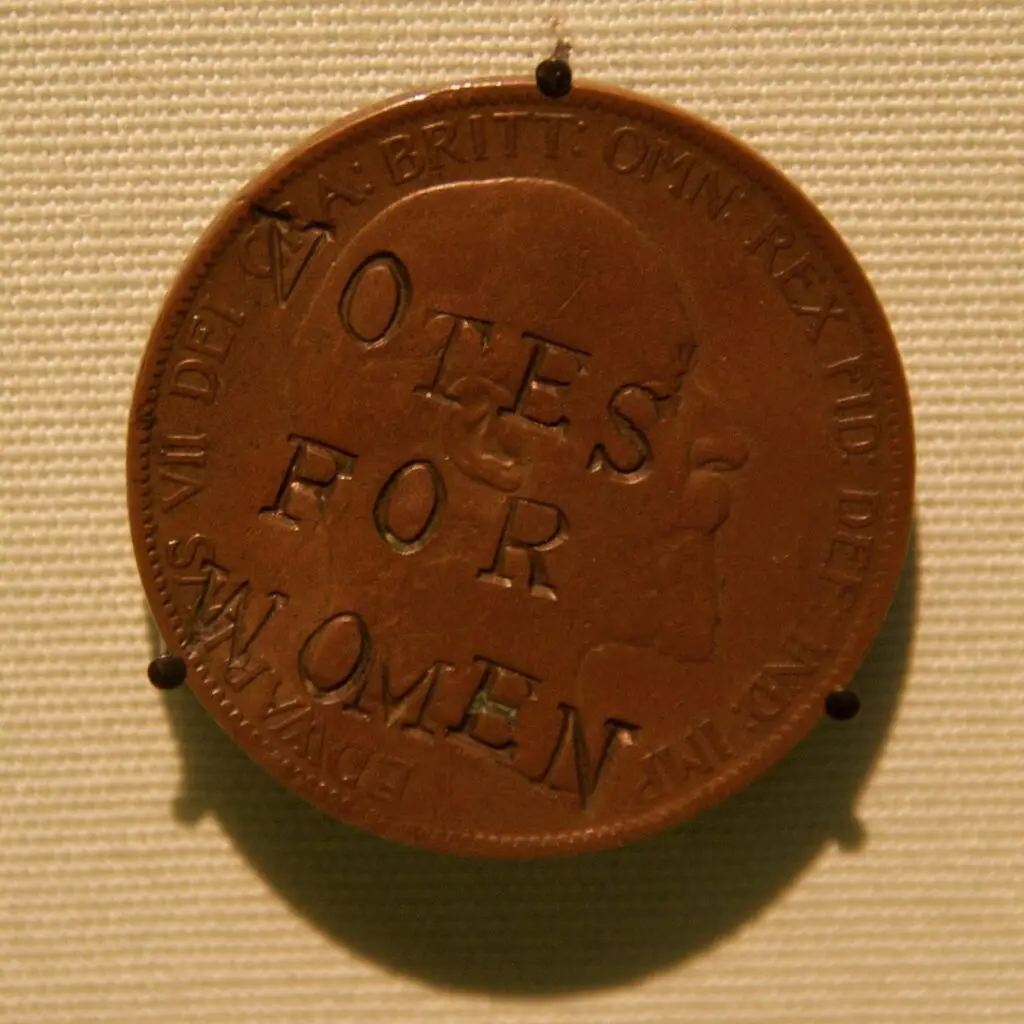
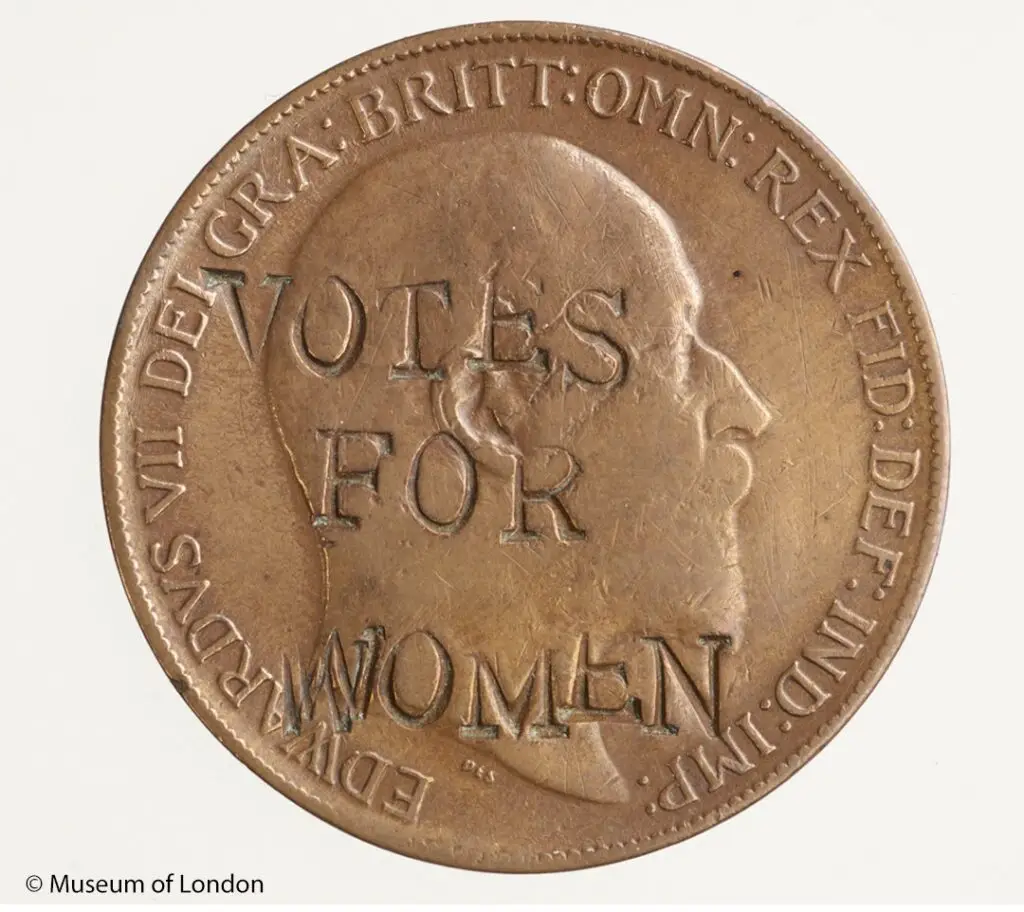
Stamped all over the King's head, in crude capitals, are the words, "VOTES FOR WOMEN".

Before the Trump administration took office, the U.S. Mint—working with historians, the Smithsonian, and a bipartisan Citizens Coinage Advisory Committee—had developed designs that told a fuller American story. One proposal featured Frederick Douglass, paired with imagery of shackled and unshackled hands. Another honored women’s suffrage with a World War I–era protester holding a “Votes for Women” banner. A third depicted six-year-old Ruby Bridges walking into a desegregated New Orleans school in 1960.

None were selected.

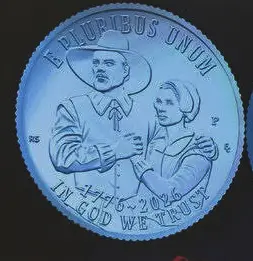
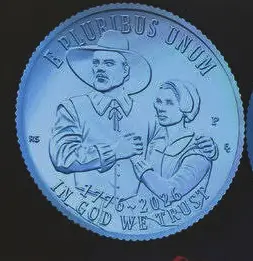
Instead, the final designs returned to safer ground: Pilgrims, presidents, and parchment. George Washington. Thomas Jefferson. James Madison. Abraham Lincoln. One quarter shows a Pilgrim couple gazing into the distance, meant to represent the Mayflower Compact.

Coin-design-reflecting-the-debate-over-how-women-are-represented-and-remembered-in-American-history.
A coin meant to honor women’s history, reframed by Trump's Administration as male-guided presence.

According to the Mint, this image satisfies the legal requirement that at least one coin recognize women’s contributions to the nation’s founding.  The woman, notably, does not stand alone.  She appears holding the hand of a man.

The symbolism is subtle but unmistakable: women are present in history, but never centered. Essential, yes—but framed through male protection and authority.

This erasure is especially striking because the law authorizing these coins explicitly called for recognition of women’s contributions. The advisory committee followed that mandate carefully, submitting its recommendations in 2024. After President Trump returned to office, months passed without response. Then came the unveiling—featuring designs the committee had not reviewed and excluding the movements Congress had instructed the Mint to honor.

Vote-For-Women-Stamped-into-Coin-by-the-suffragettes-it-worked-Coin-design-reflecting-the-debate-over-how-women-are-represented-and-remembered-in-American-history.
A suffragette coin refers to rare, pre-decimal British pennies (and sometimes other coins) defaced by members of the women's suffrage movement, primarily the Women's Social and Political Union (WSPU), with slogans like "Votes for Women" or "Deeds Not Words," used as a subtle, circulating form of protest to spread their message and challenge male authority in the early 20th century, often around 1913.

The shift aligns with the administration’s broader campaign against what it labels “wokeness.” Through executive orders and cultural directives, the White House has sought to “restore truth and sanity to American history”—a phrase that increasingly appears to mean removing images of struggle, protest, and progress led by women and people of color.

At the same time, plans advanced to feature President Trump himself on a commemorative coin—an unprecedented move that breaks with a long-standing American tradition. George Washington rejected such proposals, fearing they echoed the monarchy the nation had just overthrown.

The irony is sharp. Suffragists who fought for the vote. Civil rights leaders who risked their lives. Girls who walked into hostile schools so others could follow. These were not supporting characters. They were the story.

Coins are small objects, but they carry enormous symbolic weight. They pass through millions of hands. They quietly teach us who matters.

And in this case, they remind us that the fight for recognition—for women, for queer people, for anyone written out of the “official” story—is far from over.

History doesn’t disappear when you leave it off a coin.

It simply waits to be told somewhere else.

If coins are meant to teach us who we are, then perhaps the answer is not another careful image, but a plain declaration. A simple quarter stamped with the words Equal Rights for Women would say more about the American experiment than any tableau of obedience or accompaniment. It would acknowledge that women’s freedom was not inherited, but fought for—and that the work of equality is not symbolic, but ongoing. Until that truth is honored plainly, history will keep asking to be told somewhere else.