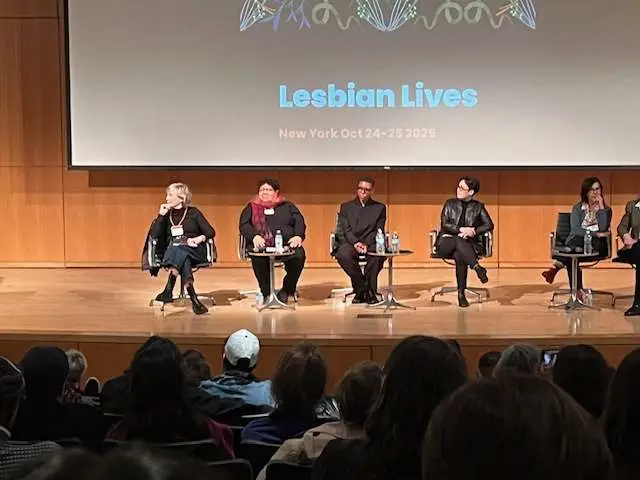
They’re Young, They’re Proud, and They’re Reclaiming the Word 'Lesbian.'
From October 23 to 26, 2025, Lesbian Lives 2025 swept through Manhattan in a radiant wave of intellect, creativity, and unapologetic Lesbian joy. For four unforgettable days, more than 700+ Lesbians filled the CUNY Graduate Center — thinkers, artists, activists, poets, writers, archivists and dreamers from every corner of the world — gathering to celebrate Lesbian history, explore new ideas, and build the future of our movement together. What began three decades ago in Ireland blossomed in New York into something larger than a conference — a living, breathing celebration of who we are, how far we’ve come, and the joy of finding each other again.
The first evening shimmered with emotion — a tribute to Urvashi Vaid, the legendary activist whose book The Dream of a Common Movement set the weekend’s tone. The book is a collection of essays, interviews, and speeches by the late feminist Lesbian and civil rights activist whose pioneering writing and organizing over the course of four decades fundamentally shaped the LGBTQ+ movement.
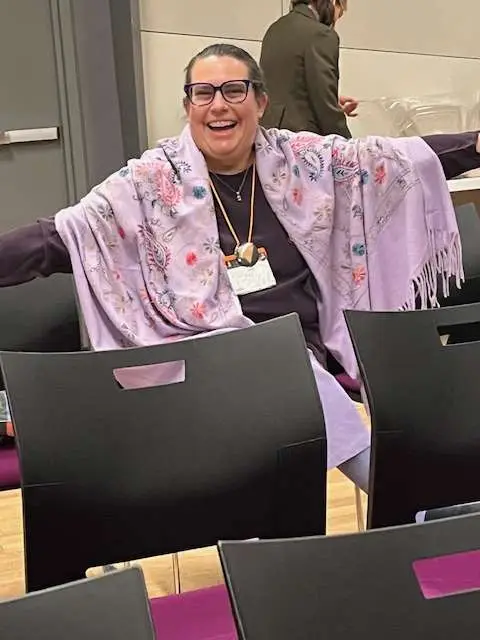
It wasn’t nostalgia. It was resurrection. We honored the Irish founders of the conference — Katherine O’Donnell, Kath Browne, and Olu Jenzen — who first launched it in 1994 in the UK and Ireland. This year, it crossed the Atlantic for the first time, landing in New York City in glorious, organized chaos.
Collaborators from all over the world convened to celebrate Lesbian spaces, share ideas, and strengthen solidarity. Co-organizer and Sinister Wisdom publisher Julie R. Enszer did an outstanding job organizing the rich conference. From the opening welcome to the final embrace, Julie’s touch was everywhere: in the thoughtful programming, the intergenerational mix of artists and academics, archivists to poets, and the palpable sense of Lesbian joy that threaded through every room. Her work, alongside the organizing team, transformed what could have been a conference into something radiant and restorative — a living testament to our creativity, intellect, and collective power.
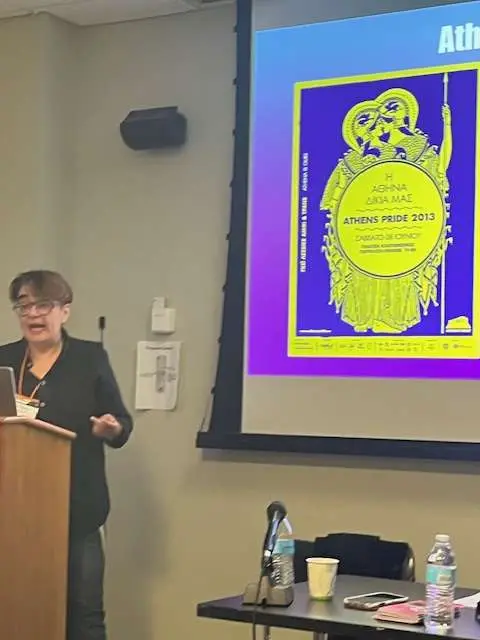
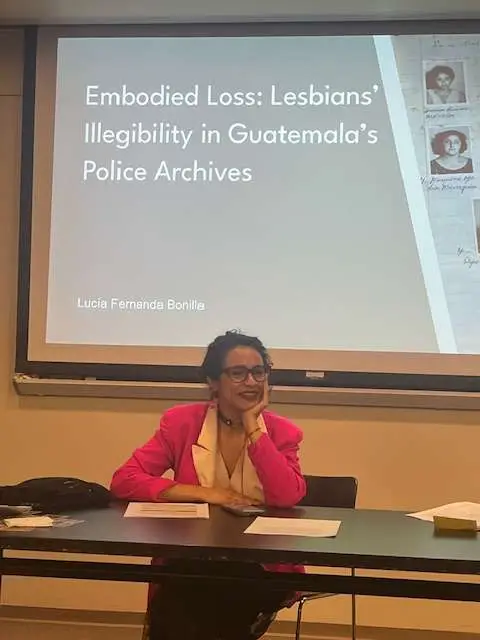
From there, it just got better. Participants arrived from Ireland, Poland, Turkey, Hong Kong, China, Palestine, South America, and beyond, joining U.S. academics, artists, and community leaders to trade knowledge, laughter, and love. The offerings were abundant: dozens of mouth-watering panels and workshops — from Big Fat Brown Pleasures to Anatomy of a Lesbian Breakup, from queer abolitionist activism to “data dykes” digitizing our archives. It was proof that Lesbian culture is global, growing, and gloriously alive.
I was stunned — in the best way — by how many younger Lesbians showed up. Students, artists, TikTok philosophers with tiny pronoun pins and fierce opinions. Over coffee, one told me, “Coming out isn’t the struggle anymore. It’s what to call ourselves that’s hard. Every week there’s a new term, and then I realize — wait. I’m just… a Lesbian.” And the way she said Lesbian — soft, then proud, then loud — gave me goosebumps. After years of being squeezed out of our own story, here they were reclaiming the L-word not as exclusion, but as connection. Language healing itself. Community reblooming.
The sessions started at 8:30 a.m. and ran like a marathon through the beating heart of Lesbian thought. There was A Queer Chicago (with Artemis Singers and pulp revivalists), a panel on Milwaukee’s Lost Bars, and Getting Hands-On with a Northern Canadian Lesbian Archive. There were talks on what is going on in archives from France to China, Austria to Brooklyn, where attendees literally handled history — zines, photos, newsletters — like sacred relics. Topics went from Polish publishing to Lesbian economic empowerment, from 18th-century Lesbian desire to Femme Rule: A Method for Performing Elsewhere. By Friday, someone whispered, “This is like Lesbian grad school, Burning Man, and therapy all in one.”
What moved me most wasn’t only the panels — it was the hallway magic. Older women swapping ACT UP stories. Younger ones giggling over first crushes. A French collective showing off their Lesbians Against Forgetting tote bags. A woman from Japan describing Lesbian feminist rebellion. It felt like a living archive — breathing, witty, and full of ink and love. Sessions like Listening to Our Elders and Lesbian Ephemera turned dusty archives into emotional revelations. As one speaker said: “If we don’t save our stories, the internet and history will erase us.”
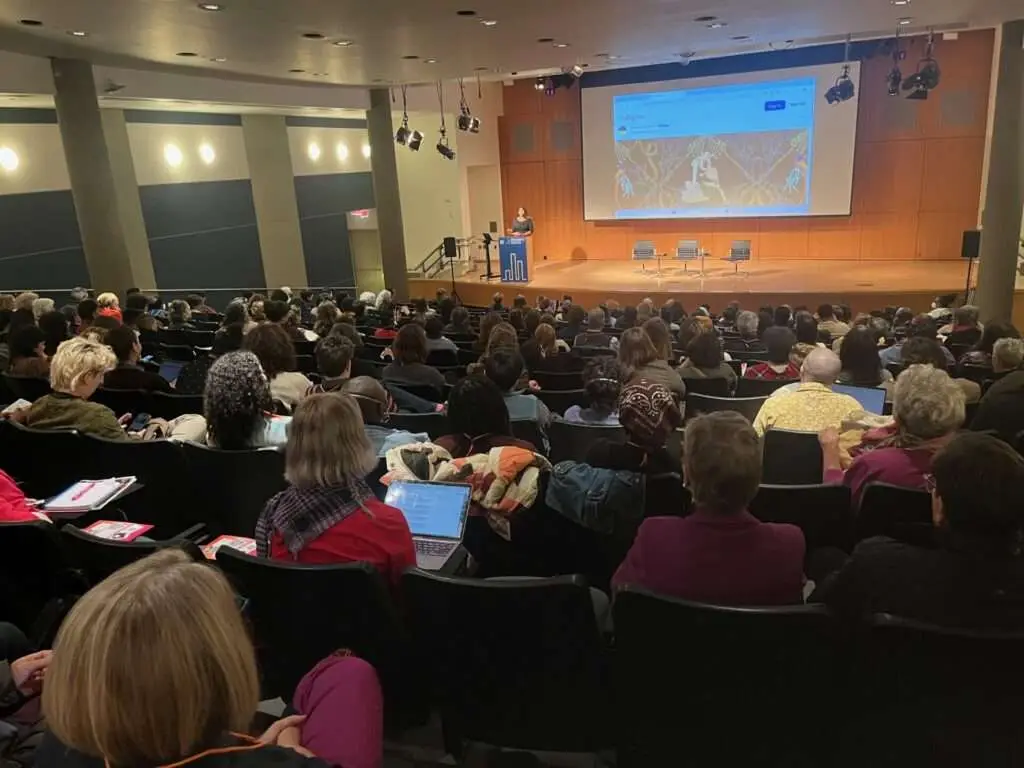
Panels such as Thinking About Lesbian Health and A Politics of Pleasure pushed beyond the clinical into joy, embodiment, and autonomy. At Erotic Accounts of Lesbian/Trans Bodies of Color, laughter and tenderness filled the room. It wasn’t academic — it was sacred. The body as resistance, as memory, as proof we’re still here.
There were Lesbian movies all day. Lesvia and Ferro’s Bar drew tears and spontaneous applause, while Black Rainbow Love and Thanks, Babs! turned the Segal Theatre into a queer film festival of its own. Each filmmaker echoed a shared heartbeat: “Visibility isn’t enough — we need complexity.”
Perhaps the soul of the conference lay in the intergenerational panels. Boomers reminisced about marches and women’s music with Margie Adam, Judith Casselberry, and photographer Morgan Gwenwald (of On Our Backs fame). Gen Zers spoke of building safe digital Lesbian spaces. There were jokes about arthritis and pronouns, but under it all pulsed love — a current louder than any debate.
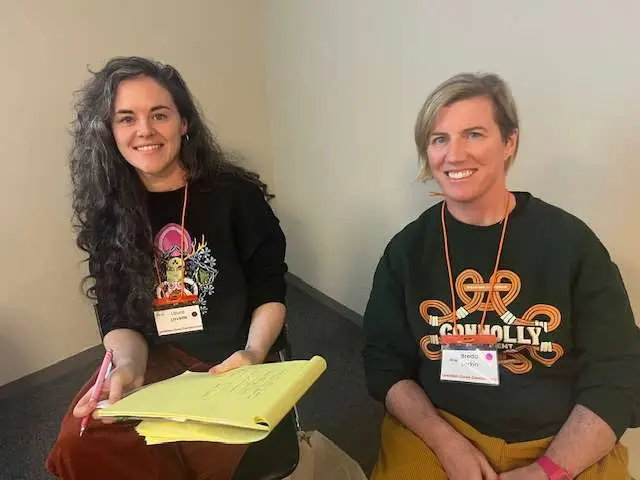
Lesbians from Poland read poetry of resistance. From Chile and Taiwan came stories of archives-in-exile and art as activism. From Brazil, filmmakers of Ferro’s Bar reminded us that queer joy is its own revolution. For once, the Global South wasn’t a sidebar — it was the heartbeat of the story.
One night brought a legendary Meow Mix bar. Dating-minded attendees sported purple stickers on their name badges, and a bulletin board of hearts invited “missed connections” to find each other. (Yes, it worked.)
The final day felt like a love-fest and a strategy session rolled into one. In Turning the Tide, Margie Adam, Alice Coffin, and Lynn Harris Ballen reflected on The Lesbian Tide, that 1970s publication that gave us language before algorithms. I kept hearing Urvashi Vaid’s voice: “We build movements not just to survive — but to shine.” As we hugged goodbye in the lobby, trading emails, phone numbers and promises, I knew: Lesbian Lives 2025 wasn’t just a conference. It was a revival, a reunion, and a revelation.
This first U.S. edition felt like more than history — it was prophecy. The conference itself has always been an “emerging lesbian oasis,” one that thrives on our collective care and cultivation. And as one young woman told me — wearing a vintage Dyke Energy tee and a grin bright enough to light up the Bronx — “We’re not the past of queerness. We’re the future of it.”
Amen to that.