
The Turquoise Alert: The National Crisis of Indigenous Women
It starts quietly. A phone that goes unanswered. A shift at work missed without notice. A family member’s voice rising with panic: “She’s gone.”
And then — silence.
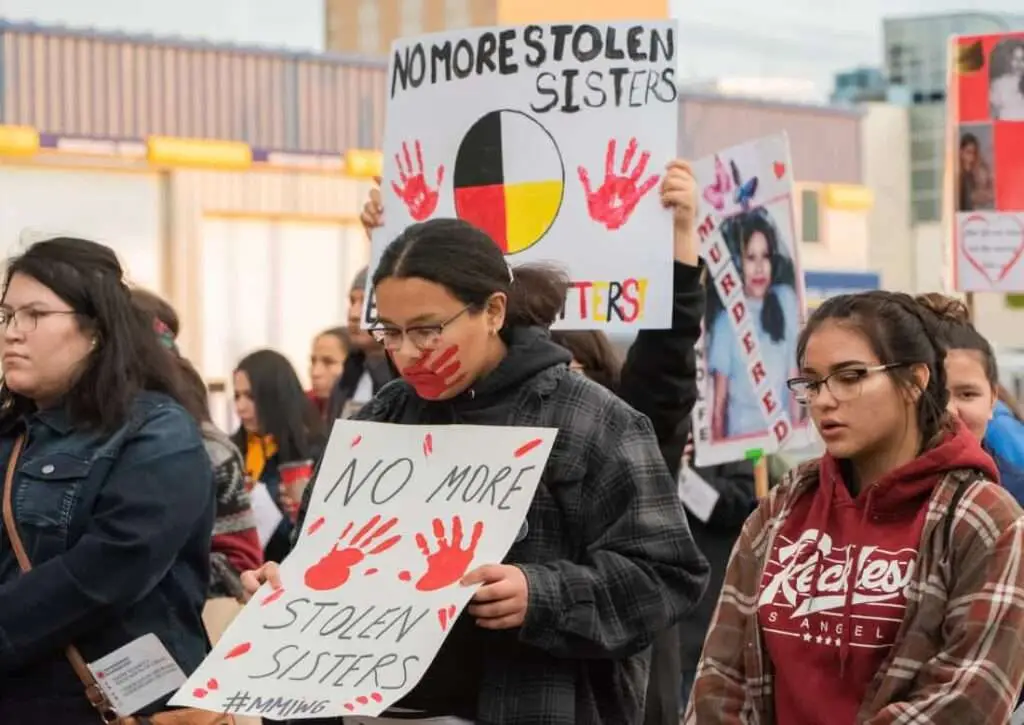
For Indigenous families across the United States, especially here in New Mexico and the Southwest, this isn’t the stuff of television crime dramas. It’s the air they breathe. It’s a nightmare that lives in the room with them, even in the daylight. For some young Native Americans in our community, the fear of becoming another statistic is so real they’ve marked their skin with identifying tattoos — a quiet act of survival in a world that too often looks away. As the Bureau of Indian Affairs notes in its national report, the scale of the Missing and Murdered Indigenous People crisis underscores just how invisible these stories have been in the eyes of federal systems.
An Advocate Who Refuses to Look Away
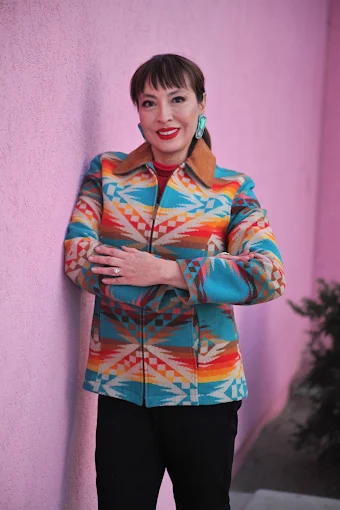
Attorney Darlene Gomez is not only a legal champion — she is the driving force behind MMIWR: Missing and Murdered Indigenous Women & Relatives. For nearly 25 years, she has worked these cases, often for no pay, standing beside the families of 27 missing Indigenous women and relatives, absorbing their grief, frustration, and fury as if it were her own.
When I sat down to interview Darlene, her voice carried both steel and compassion. “These families carry generations of pain,” she told me. “My job is to make sure they don’t carry it alone — and that the rest of the world is finally forced to see them.”
Raised in a community that was 95% Native American, she speaks of this work not as a legal specialty, but as a moral inheritance. “These are my people,” she says, “If I don’t fight for them, who will?” She states that 83 to 86 percent of Native American women will experience a major violent crime in their lifetime — a number that jumps to nine out of ten when factoring in underreporting. Men vanish, too: 65% of missing Indigenous men are never found. Two-Spirit individuals — those who carry both masculine and feminine spirits in traditional Native understanding — face dangers that are greater still and harder to measure.
The fear runs so deep that some young Native Americans have turned to an unsettling form of self-protection: getting distinctive tattoos, not as art, but as a way for their families to identify their bodies if they go missing. It’s a chilling adaptation to life in a system they know won’t protect them.
Two-Spirit: Erased in Life, Erased in the Search
In many tribal nations before colonization, Two-Spirit people were respected, even revered, as spiritual leaders, healers, and cultural keepers. Today, those same identities are often erased at the very moment protection is most needed.
When a Two-Spirit person goes missing, police reports frequently default to the sex listed on their birth certificate, use outdated ID photos, and omit the person’s lived identity entirely. This misclassification slows searches, muddles public alerts, and can lead to the public — and even other law enforcement agencies — looking for the wrong person.
Their cases vanish into statistical shadows, uncounted and unacknowledged by the databases that drive federal funding and investigative resources.
It is, in effect, a double disappearance: the person is gone, and so is the truth about who they are.
The Stories That Changed Everything
For Darlene, the turning points are etched into her memory. The cruelty is not only in the violence itself — it’s in the bureaucratic indifference that follows.
In 2001, Darlene’s friend, Melissa Ann Montoya, vanished on St. Patrick’s Day. Instead of mobilizing search teams, law enforcement agencies wasted precious hours and days arguing over jurisdiction. No one took ownership. The loss cut so deeply that even in the final years of her life, gripped by Alzheimer’s, Darlene’s mother would still ask about Melissa — her voice carrying a grief that never faded. Darlene’s mother, even on her deathbed, even after years of Alzheimer’s, still asked her daughter to keep searching for Melissa.
Darlene’s seen it repeatedly. In Arizona, she attended the trial for the murder of Jamie Lynette Yazzie. She watched as the FBI and tribal police ignored critical evidence. By the time the perpetrator was prosecuted, he had sexually assaulted and attacked three more women.
The U.S. Attorney’s office, Darlene notes grimly, only acts if a body is found. “If you want to get away with murder,” she says, “just dump the body in Indian Country.”
The Turquoise Alert: Fighting the Clock
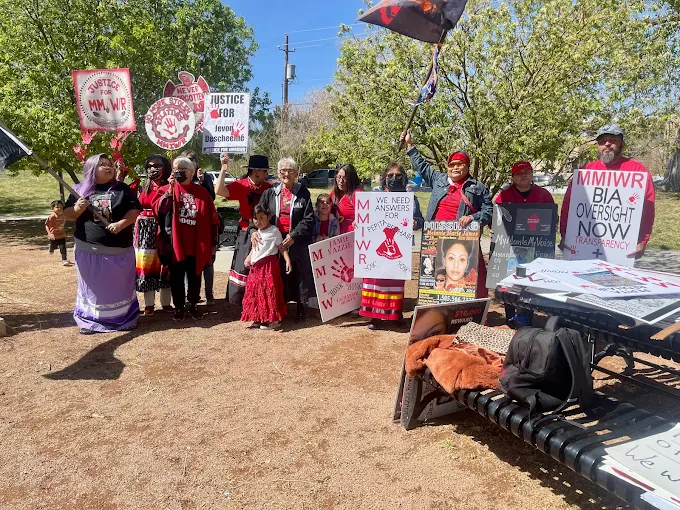
Not all of Darlene’s work ends in tragedy. She was instrumental in passing New Mexico’s Turquoise Alert, a statewide emergency alert for missing Indigenous and endangered persons.
Like Amber Alerts for children or Silver Alerts for seniors, it mobilizes law enforcement and the public within hours. Before this law, missing Indigenous adults could vanish without any public alert being issued. As The Guardian reported when New Mexico launched the Turquoise Alert, the law was a groundbreaking first in the nation — born from years of advocacy and community pressure.
The message is simple: speed saves lives — but only if the system decides those lives are worth saving.
The Searchers Left Behind
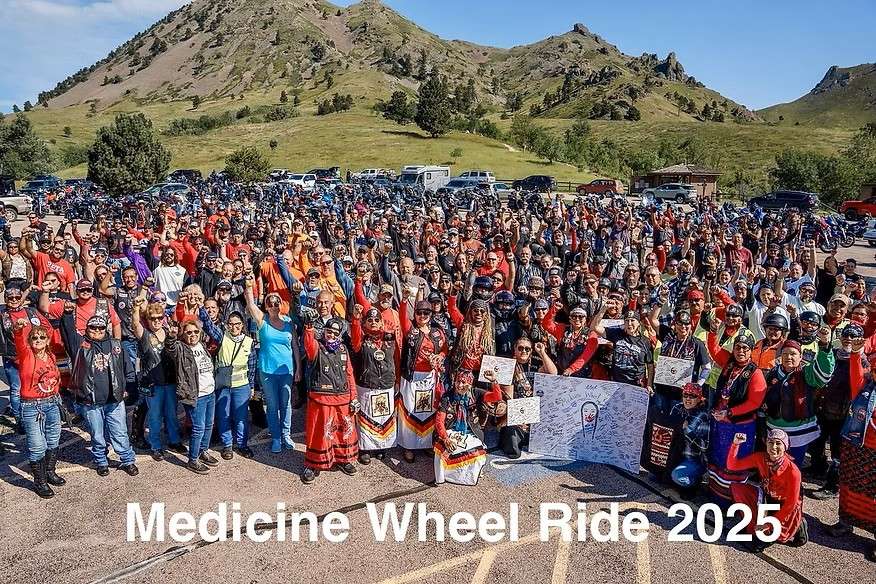
In the absence of official urgency, it’s the community that searches. Motorcycle groups like the Medicine Wheel Riders scour fields, canyons, and riverbanks for people the FBI never looked for.
Every hour matters. But in Indian Country, every case begins in a deficit—underfunded, understaffed, and weighed down by layers of legal jurisdiction that work like quicksand.
Recognition, and the Work That Remains
In recent years, Darlene’s work has begun to draw national notice — though she’d trade every award for a world where it wasn’t needed.
USA Woman of the Year for New Mexico (2025)
U.S. Attorney General’s Award for MMIWR work (2025)
Pro Bono Attorney of the Year, NM (2022)
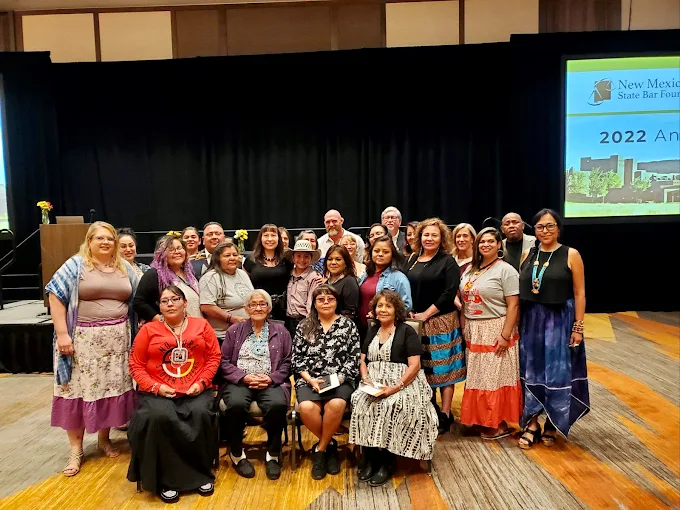
Attorney of the Year for Women’s Advocacy, NM State Bar (2022)
Living in the Shadow of Violence
Darlene often tells young Native women — and Two-Spirit relatives —to prepare, not in fear, but in defiance. She urges them to:
- Add a “Find My Location” app to their phone.
- Sign a Power of Attorney, so police act faster if they go missing.
- Share passwords with a trusted person so accounts can be monitored for suspicious activity.
It’s survival advice that should never be necessary. But in her world, it is.
What Needs to Change
Her demands are blunt:
- Audit the FBI’s handling of MMIWR cases.
- Fund Indian Country law enforcement, courts, housing, healthcare, and behavioral services.
- End jurisdictional stalemates that leave families in limbo.
- Allow prosecutions without a recovered body.
Until then, Darlene will keep showing up in courtrooms, at kitchen tables, and in community halls — wherever a family needs someone to say, “I believe you, and I’m not going away.”
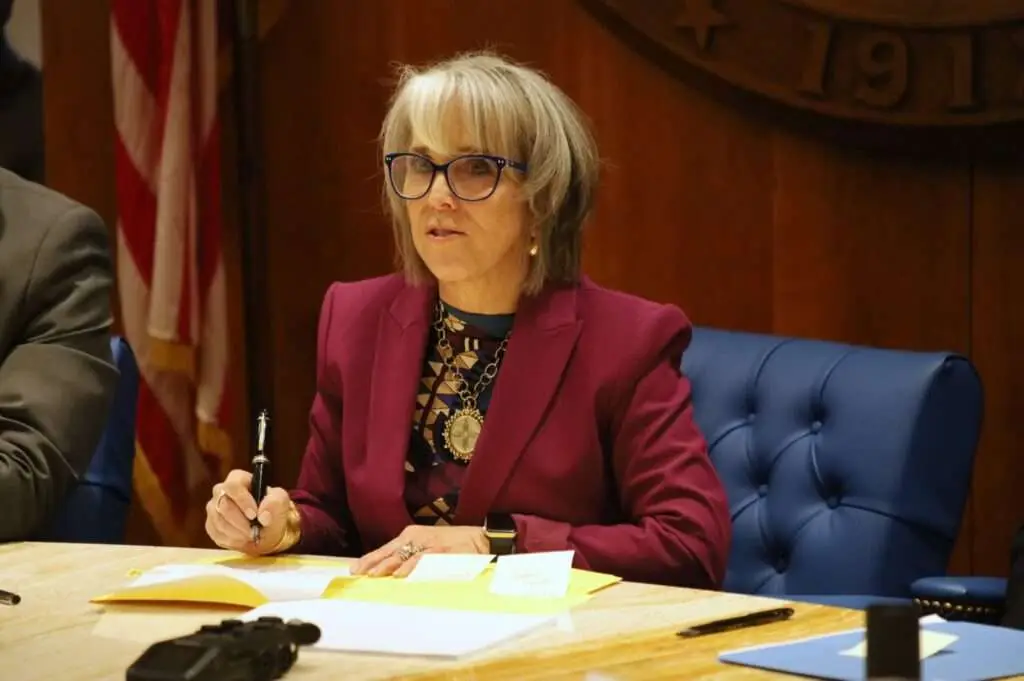



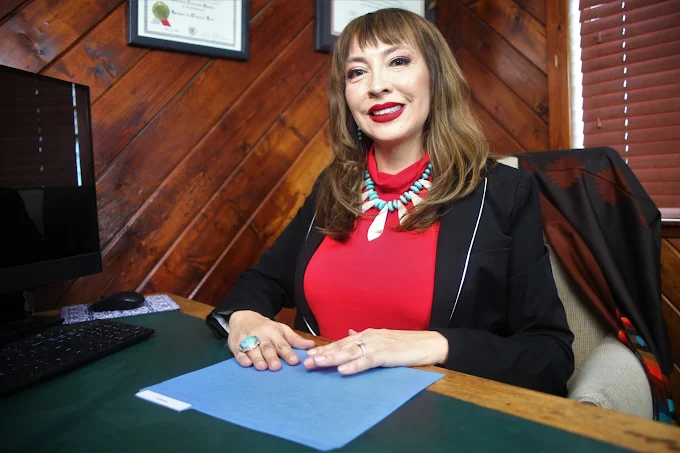
Darlene Gomez, Lawyer and Founder of Missing and Murdered Indigenous Women & Relatives (MMIWR)
Four Ways You Can Help
- Donate — Provide gas cards, printing for flyers, and food for the families and friends that are searching for loved ones. Click here to donate or go to MMIWR.org.
- Support Advocacy — Connect with the Advocacy for NM Indian Country program. Sponsor a workshop at your workplace, church, or club. Find out more at MMIWR.org.
- Volunteer Your Skills — Social services, social media, journalism and art are all critical to keeping cases visible. Contact Vivianna at 505-597-1793.
- Share This Story — Awareness is the oxygen this movement needs.
The Last Word
Darlene doesn’t talk about hope as an abstract concept. She talks about it as something you do — showing up to court when the odds are stacked against you, driving for hours to stand beside a grieving mother, sifting through brush with volunteers when the official search has ended.
“I was born here in New Mexico,” she says. “This is my community. Every time we help a family get justice; the whole community heals a little.”
And then she leans forward, as if to make sure you’re listening, “Don’t let these women disappear twice — first from the earth, and then from our memory.”
Because in the end, justice for the Missing and Murdered Indigenous Women and Relatives is not a gift to be given. It is a debt in this country that has yet to be paid. And until that debt is settled, Darlene Gomez will keep the names alive, one case, one family, one fight at a time — refusing to let silence have the final word.
Resources & Ways to Take Action
- MMIWR: Missing and Murdered Indigenous Women & Relatives
Medicine Wheel Riders – Indigenous women motorcycle group raising awareness and supporting families of missing and murdered relatives.
Bureau of Indian Affairs: Missing and Murdered Indigenous People Crisis – Federal updates and resources on MMIW/P cases.
Urban Indian Health Institute – MMIW Report – Landmark study documenting cases across U.S. cities.
National Indigenous Women’s Resource Center (NIWRC) – Advocacy, training, and survivor support services.
National Congress of American Indians – Violence Against Native Women – Policy advocacy and key statistics on Indigenous women’s safety.
The Guardian: New Mexico Creates Turquoise Alert – News coverage of New Mexico’s groundbreaking alert system.
Want to support queer women doing the work?
📰 Subscribe to Your Lesbian World
🌐 Visit LesbianEarth.com
🌐 Become a Social Media Ambassador for LesbianEarth.com
❤️ Support Lesbian+ and Queer Women businesses
🎉 Support Lesbian and Queer Women Events
❤️ Say yes to something rooted, real, and built by us
We don’t need permission to exist.
We just need each other.
With love and fire,
Your Lesbian World / LesbianEarth